Showing posts with label daily workout. Show all posts

Tuesday, 1 August 2017

The Top 5 Fat-Blasting Exercises

The problem with this plan (or lack thereof) is that you are wasting huge amounts of your precious time and energy on activities that aren't giving you the best results, or in a lot of cases, any results. Exercise is a science and there are certain basic guidelines that need to be followed in order to get the most out of it. A couple of things to remember: not all exercises are created equal, and long, steady-state cardio (i.e. you walking or jogging on the treadmill for an hour) is not the most effective calorie burning activity.

Let's look at the first point: not all exercises are created equal. Question for ya.
Which exercise is best? Uhmm
Which exercise should you spend more time focusing on: squats or crunches? Some might say, 'Well, it depends on your fitness goal'. And, yes, that is somewhat true. But for the average exerciser whose goal is to tone up, lose fat, and stay fit, the correct answer is squats. Surprised? A lot of women are shocked by that answer. The reason is that there is no such thing as true spot reduction. So doing 1000 crunches does not make you lose significant amounts of fat in your stomach area. Doing crunches will strengthen your abs, but that isn't the same as burning fat. If you want to melt away the fat, you need to burn lots of calories. And doing squats will burn a heck of a lot more calories than doing crunches. The reason being that you use a lot of large muscles (quads, hamstrings, glutes, back) when you perform a squat. Working all those large muscles burns calories. (I'm oversimplifying the process to save time here, but the bottom line is the same.)

Now for the second point, steady-state cardio is not the most effective activity for burning calories. Steady-state cardio is any cardio activity (jogging, elliptical, treadmill, bike, etc) that is performed with the same intensity for long periods of time. So what is more effective at burning calories than going for a morning jog? Going for a morning sprint with walking breaks. Instead of jogging for 45 minutes. Sprint for 30 seconds, then walk for 45 seconds. Repeat for about 20 minutes. This style of cardio will burn 10 times the amount of calories in half the time as steady-state cardio.

Now that you know the above two facts, we will get to my list of the top 5 fat-burning exercises, and it will make sense as to why these are my top 5...they are either large-muscle exercises that burn a lot of calories, or they are interval cardio activities that burn a lot of calories, or both. (editor's note - before doing any exercise it is best to seek the advise of a professional and learn to do them correctly)

Here's the list of the Top 5 Fat-Blasting Exercises... (not in any particular order)
Clean and press - a lot of bang for your buck


1. Clean & Press. The clean & press works the legs, back, shoulders, and core. You can use heavy weights with this power exercise which really ramps up the intensity and gives you a lot of bang for a short amount of time invested.

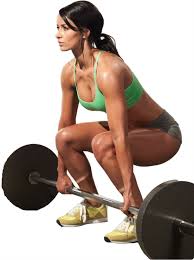
2. Deadlifts. Like the clean & press, you work a bunch of muscles when you deadlift, including your legs, back, traps, and glutes. Again, you can use pretty heavy weights for this exercise as long as you keep your form strict.

3. Hill Sprints. A lot of people swear by the effectiveness of hill sprints and that includes me. I always do these when I want to lean down a little more. Find a good sized, fairly steep hill and sprint up it as fast as you can. Then walk down and repeat.
Hills don't need to be steep or long to be effective


4. Squats. Squats are probably the king of all weight exercises. There are 100 different variations so you won't get bored. Try them all. Include at least 1 squat version in every full-body or leg workout.

5. Lunges. These are basically 1-leg squats. You have to do with one leg what you do with both legs in a squat. Therefore, you can't use as much weight, but you still work a lot of muscles doing this exercise. There is also more balance and agility involved. Like squats, there is almost an unlimited number of variations of lunges.

If you do a full-body workout 3 times per week, integrate 1-2 of these exercises in each workout. You will quickly find yourself getting stronger, leaner, and more toned than ever!

Article Source: https://EzineArticles.com/expert/Bobbi_Johnson/288619

Monday, 5 September 2016

Monday Muscle - Muscle Memory - Can Muscles Actually Remember?

Ask any bodybuilder what muscle memory means and they will readily answer that it is the ability to regain muscle mass more quickly after a period of inactivity than it took to gain the same mass originally. However, if you type the term "muscle memory" into a search engine on the internet, you will find there are many different interpretations of this term. And depending on which authority you consult, the meanings are diverse.

Some believe that muscle memory is simply the application of learned processes much like a baby learns to walk or feed itself.
Repetition can bring success
After many repetitions of the same action, parts of the body are able to react without the person thinking about what they are doing, and the action involved seems to come naturally. If this is true, then muscle memory is actually a neurological function that is built into all humans. According to Andersen, et al. (2005), some studies have shown that neurological and physiological changes occur during skill training, but not during strength training alone.

Others believe that there is an actual physiological change that occurs in the muscles during strength training, altering the function of certain muscle fibers, causing them to bring about muscle growth more readily than before training. In both cases, the muscle's ability to regain both strength and size may be enhanced if training is stopped for a period of time and then started again.

Resistance training and weight training require a combination of strength and motor skill. As a person learns how to perform certain exercises, it is important to learn the right patterns of movement that will achieve the desired muscle growth (Jensen, Marstrand & Nielsen, 2005). Many people define muscle memory as muscular hypertrophy, kinesthesia, proprioception or a result of neuromuscular facilitation. To some extent, all of these definitions play a part in muscle memory. Let's start by defining these terms and showing their interaction with one another to facilitate "muscle memory" during strength training and bodybuilding (as well as other types of exercise).

Muscular Hypertrophy Hypertrophy is the increase of the size of an organ or select area of tissue that occurs due to an increase in the size of cells. Muscular hypertrophy occurs through increased contractile proteins. Myosin heavy chain isoforms, or MHCs, refer to the types of protein seen in a given muscle fiber.

MHCs determine how the muscle fiber functions.
Some moves give more muscle
There are two types of MHCs - IIX, which are neutral until they are put to use by the muscle, and IIA, which have a specific purpose of causing muscle growth. Certain MHCs undergo a change in response to resistance exercise and serve as a reservoir of sorts for muscle hypertrophy because they can transform themselves into the types of fibers which grow easily in response to training (Haycock, 2004). Many scientists believe that once these types of muscle fibers are generated by regular resistance or weight training, they remain in the muscle, waiting to be reactivated. If a person does not exercise, or detrains, for a long period of time, and then begins an exercise regimen again, the fact that there are an abundance of muscle-growing fibers already present from previous workouts helps to regain muscle more quickly the second time around. In fact, certain types of strength training advocate detraining for a period of time in order to facilitate this type of response in the muscle, therefore eliminating the possibility of hitting a plateau that is difficult to overcome (Haycock, 2002). Without that plateau, a bodybuilder is better able to continue growing in muscle size and strength.

Kinesthesia Kinesthesia is the body's ability to sense the position and movement of all parts of itself, such as limbs and muscular tension. For example, if a person closes their eyes and holds their arms straight out in front of them, they are able to tell without looking if their palms are facing up or facing down. For a bodybuilder this translates into the body's ability to know the precise location and position to stop during a repetitive exercise in order to achieve the right amount of flex and tension to maximize the results. If you've taken part in a good program of resistance training, you will retain the ability to repeat the correct movements even if you stop training for a while.

It is important to note, however, that learning the correct way to perform an exercise is the key to achieving the best results. If a person learns the wrong movements, they will not achieve the same results. It is best to use a personal trainer or receive some sort of instruction when learning to exercise the different muscle groups, because learning the wrong form can cause damage or result in a workout that does not meet the exerciser's goals. And the time and effort involved in unlearning bad technique can be substantial and can totally demoralize the individual.

Proprioception/Neuromuscular Facilitation Proprioceptive Neuromuscular Facilitation is the term used to describe stretching exercises that increase range of motion in a muscle, thereby increasing strength and flexibility. It is often used as therapy after an injury or long periods of inactivity such as bed rest. By stretching and contracting and rotating a muscle, sufficient use can be regained even though the muscle has not been used as much as it would be normally, thus allowing a person to regain normal function. Stretching is an important part of physical fitness because it prepares the muscles for the physical activity involved in performing certain movements. It can reduce muscle strain and the danger of injury during a workout session. In order to be in top physical condition, a person must have good flexibility. Of course, there are different types of stretching for different routines.

Is Muscle Memory a Myth or Fact? Many articles and studies exist that discuss whether muscle memory in relation to bodybuilding and weight training is a myth. Some experts believe that muscle memory is simply a normal function of the body, that it is more related to the way the brain sends signals when performing any movement.
Correct movements mean optimum benefit
However, we'll use the term to define the memory of a learned pattern of behavior, such as how to make the correct movements while performing resistance training exercises to obtain optimum benefit.

Based on my interpretation of the literature, as well as my own experience, muscle memory is real and does have an impact on a person's ability to regain muscle mass quickly after a period of no exercise when they previously practiced a regular exercise regimen. A good analogy is learning to ride a bicycle or learning how to swim - once a person learns how to do these things, even if they don't do them for a long period of time, they are able to operate the pedals and retain their balance on a bicycle, or kick their feet and rotate their arms to stay afloat when swimming.

Sources:
Andersen, L. L., Andersen, J. L., Magnusson, S. P., Suetta, C., Madsen, J. L., Christensen, L. R., & Aagaard, P. (2005). Changes in the human muscle force-velocity relationship in response to resistance training and subsequent detraining. Journal of Applied Physiology, 99, 87-94.
Staron, R. S., Leonardi, M. J., Karapondo, D. L., Malicky, E. S., Falkel, J. E., Hagerman, F. C. & Hikida, R. S. (1991). Strength and muscle adaptations in heavy-resistance-trained women after detraining and retraining. Journal of Applied Physiology, 70, 631-640.
Trappe, S., Williamson, D., & Godard, M. (2002). Maintenance of Whole Muscle Strength and Size Following Resistance Training in Older Men. Journal of Gerontology: BIOLOGICAL SCIENCES, 57A (4), B138-B143.

Darrin Clement runs http://worldfitnessnetwork.com, a blog covering the Art and Science of Building Lean Muscle Mass and An Awesome Physique. Sign up and get our free e-book on bodybuilding.

Article Source: http://EzineArticles.com/expert/Darrin_Clement/96563

Friday, 2 September 2016

Fat Loss Friday - How to Speed up Your Metabolism - Learn How You Can Speed Up Your Metabolism

Did you know?


Your metabolism is the machine inside you that keeps on working away to keep the weight off and burn fat.
Increase your metabolism at any age
The sad part is most people in their 30's and up struggle with their metabolic rate. This being a leading factor to why you have weight problems. But let's be honest, everyone out there who have the problem of everything you eat turning into excess fat or water weight is upsetting. A fast metabolism means more calories burned. You can speed up your metabolism so it works harder for you. It's very easy to regulate it and keep it at a medium to high rate to drop those unwanted pounds of fat.

Things you should consider


There are many sayings about fast and slow metabolism. Truth is you don't have as much control over your metabolism as you think but you can control how many calories you burn through your level of physical activity. The more active you are, the more calories you burn. There are three very effective ways to lose weight and burning calories to speed up your metabolism. Aerobic activity is the best way to burn calories. The goal should be 150 minutes a week of walking cycling and swimming. You can reach this goal by doing 30 minutes five days a week and breaking down your activity sessions in 10 minute sessions. To speed that metabolism up drastically you likely need to do more than that a week and make changes to your diet.
Any age is a good age to start weight training
Strength training is another excellent workout to help you speed up your metabolism. Muscle tissue burns more calories than fat tissues so increasing your muscle mass will help you lose weight. Aim to do two or more days a week that work all major muscle groups like lifting weights and high intensity rounds of exercise like cross fit workouts.


Try This...


We all know working out is great for your our health and it is the most beneficial for your metabolic rate but it isn't the entire picture. What you eat and how you eat it eat plays a big role in all of this. First thing you want to do is drink two glasses of ice water as soon as you wake up. The water will wake your body out of sleep mode and into awake mode. The cold water will start to shunt the water from the internal organs to the peripheral muscles. This gets your blood pumping and flowing, which boosts your metabolism one to two percent.

Eating certain foods at certain times of the day, waking up early and eating your breakfast is key but also eating your dinner before six and nothing after that except water throughout the evening. A food group in particular that helps speed up your metabolic rate is spicy foods. Hot peppers have been linked to reducing obesity and related disorders because they increase energy expenditure and fat oxidation by increasing the metabolism. Another excellent natural

For information on how to speed up your metabolism to lose weight go to http://taylorsmith.myautomaticbuilder.com/cp/12046


Read more: How to Speed up Your Metabolism - Learn How You Can Speed Up Your Metabolism http://www.sooperarticles.com/health-fitness-articles/weight-loss-articles/how-speed-up-your-metabolism-learn-how-you-can-speed-up-your-metabolism-1472883.html#ixzz4G0BdX4TX
Follow us: @SooperArticles on Twitter | SooperArticles on Facebook

Monday, 29 August 2016

Monday Muscle - Muscle Memory, Going Back to Muscle Building

Some people can't do something without motivation. Most first time gym goers quit because of fatigue, laziness, time constraints, injury, or some other silly excuse. Stop dreaming of a super soldier serum.
Use motivational images
Captain America is a just a comic book super hero. It's not impossible but we're far from that kind of technology.

Don't worry. I quit several times since I was teenager. The important thing is the willingness to keep coming back.

Some, people can't take the challenge of lifting weights for self-improvement. They grow big for a few months and then stop. Most never go back to the gym but there are a brave few who decide to go back.

And that, is the purpose of this topic. One should never fear going back to the gym to get bigger and do the same thing in the same amount of time over and over again. This, my friend, is something you don't need to experience because of muscle memory.

So what exactly is muscle memory? Muscle memory is man's retention in the memory of movement stored trough repetitive motor tasks. Muscles become accustomed to certain type of movement. It's when you try something like riding a bike for the first time and then learn from a series of trial and error. And then, after a few years of not riding a bike, you try using one, and then you don't fall. It's because your mind still knows exactly how to balance your body in a bike.

So when exactly muscle memory helpful for us bodybuilders?

Remember the rule that progress is needed to gain bigger muscles? Muscle memory is very helpful for people who quit bodybuilding but decided to bulk-up again. Muscle memory allows bodybuilders to immediately return to their old physique faster than when they first tried.

Muscle memory let's you lift weights easier too. When the body does the same thing over and over, like doing squats, dead-lifts and other exercises, the body automatically adjusts to the act. Doing it feels like you don't need to think about proper form anymore. The act becomes second nature to your body. This means you can lift more weight. More weight means bigger muscles!

I've had my share of quitting too.
The important thing is not quitting
I already gave all kinds of excuses. I've already quit several times since my teenage years. But I kept coming back. And every time I came back I became better and better. This should be the same to most people who have already quit. It's never too late to start building muscles again. You never know what would happen next. You might be the next Mr. Olympia. You might become a fitness coach. You might even be the next boyfriend of your dream girl. Or you can just be a better person and feel good about yourself.

Just take one step further. All it takes is that courage to try something again. This time, things are easier than your first.

It's because of muscle memory.

Remember that!


Article Source: http://EzineArticles.com/expert/Elnel_Andrew_Nagoy_Roque/1119156

Monday, 11 July 2016

Monday Muscle - How To Bench Press 225

Today I will be teaching you how to bench 225 pounds.

Step 1: Get a training partner. 
Train with a partner

I put this as number one because you need someone who is going to challenge you. Not only this, but you need someone that is going to be there to spot you if the weight is too heavy and it gets stuck on you. You have to be fearless in the bench press. If you are bench pressing alone and you are scared the weight is going to get stuck on you, then you will not use as much weight as you possibly can.

Step 2: Get on a program. 

A 225 bench press is not miraculous by any standards, but it is definitely a step in the right direction. If you tell a person that you have a 225 bench press, they will definitely be impressed to say the least. The reason that you need to get on a program is because you need to develop overall strength. You do not want to have toothpick legs while your upper body is the size of a house. Getting on a program will teach you the essentials for weight training. Whether this is switching up volume, sets, or reps.

Step 3: Start small. 

A big mistake that many people make when on the adventure of increasing their bench press is that they start too big. The idea of strength training is to make gradual gains every week. You may want to start each week by adding 5 pounds, after starting at a weight that you can easily manage. After this, you may want to add 2.5 pounds per week. It shouldn't be a surprise that many people should start with just the bar (45 pounds) and work up slowly from there adding 5 pounds per week. This will not only help you not plateau, but it will improve your form and avoid injuries until your muscles and joints get used to a heavier weight.

Step 4: Be consistent. 
Be consistent

This is the most important step. If you are not consistent with your training, you are going to end up with a lousy bench press. You have to bench press at least one time a week. This will improve your form and it will get you better at the movement. If you are not consistent with your training you will never make any progress. Even if you are not increasing the weight each week, that is okay. The key is to stay patient and keep hitting the weights week in and week out. Eventually your numbers will start to increase.

Article Source: http://EzineArticles.com/expert/Jeff_Keller/2281961

Monday, 16 May 2016

Monday Muscle - 4 Secret Muscle Building Principles They Don't Want You to Know

The desire to gain muscle and lose fat is common.

The people who actually achieve an uncommon body are few and far between. Fortunately, whether you want to start a new muscle building workout routine or improve the one you're already on, knowledge is power.

The more you know about how your body works the better off you'll be.

Interestingly, there are some keys to building muscle or muscle building principles that, once you know them, can help you build a new body, literally.

The smartest and best way to build muscle is to discover the truth about how your body works so that you'll be in control of how it looks.

That fact is, you are an artist.

You can actually choose to mold, create and shape your body into any shape you want.

Your tools? Instead of a paint brush or clay, you have a fork and heavy resistances.

Progressive Overload
To build muscle overload them safely


The overload principle states that the neuromuscular system must be placed under stress in order to achieve adaptations such as the building of muscle and connective tissue. Specifically, "progressive overload" is a systematic and gradual increase in the demands placed on the muscles and systems of the body. This increase in demand, if supported nutritionally, will result in the strengthening of the body as an entire unit. This is one of the most fundamental principles of body building, muscle building and strength training.

Muscular Hypertrophy


When a specific muscle group is overloaded (or over stressed) with heavy resistance, among the many adaptations, the body responds by building more muscle. This is known as muscular hypertrophy. Hypertrophy is an increase in muscle mass. This increase in muscle mass is always coupled with an increase in strength. Hypertrophy is a one of the many natural by products of a progressive overload resistance training program.

Specificity Principle


The term specificity, as applied to body building and muscle building, is the idea that the body will respond to the specific demands placed on it. If the body is trained like a cross country runner, it will respond to those demands and become more efficient at running cross country.

If the body is trained like a body builder, it will respond to those demands in a specific way and become better at building muscle.

The principle of specificity in athletic training and muscle building requires the training mode to reflect the desired outcome.

Mechanical Advantage
Learn about where levers are


The human body is composed of many different systems. For people that want to build muscle and who understand the overload principle, it makes sense that if you know more about where levers occur in the muscular and skeletal system you'll be better equipped to place stress and demand on the body exactly where you want to and where to eliminate it, if necessary.

The more you know about how the human body works the better you'll be at controlling its function and appearance - at will, if you choose. The application of the muscle building principles of progressive overload, hypertrophy and leverage are three terms that will help you build muscle fast.

Article Source: http://EzineArticles.com/expert/Curtis_J_Ludlow/108202

Monday, 4 April 2016

Monday Muscle - Simple Ways To Overcome Muscle Building Plateaus

When there is a thing which is going to be the single most disheartening issue which you will deal with in your fitness career, muscle building plateaus are it. Things are all going great - you are working hard, making huge strength gains, and appearing more muscular each day. You feel just as if you are on top of the planet. And then, almost everything stops. You no longer are generating the gains you used to as well as you have even began to lose weight rather than gain weight.
Building muscle is more than just lifting weights


When this describes your position, then congratulations, you have just came into the muscle building plateau. This is something which happens from time to time in any fitness program unless you are especially performing things to avoid it and luckily, can be beat with a bit of careful planning. Unfortunately though, many people get stuck at this time and eventually just wind up tossing in the towel. If you desire to avoid permitting this happen to you, then read on since the following sneaky hints will help you outsmart that plateau as well as get back on track to noticing the outcomes you deserve.

Take a training break

Have a break? How could that be? That's very likely what most of you are pondering. If you're not discovering improvement, why on earth should you cease working out entirely? The scientific explanation for this is mainly because oftentimes, the main reason you are not seeing improvement is mainly because you are near to becoming overtrained.

Yes, maybe you have been maintaining fine post-workout nutrition as well as making certain you get a minimum of one day off weekly to rest, but typically this is just not sufficient. As the months pass by the fatigue accumulates and eventually the body just needs a full solid week off.

Have that week off and observe. You would be surprised at what might just happen. Many people discover that following a scheduled rest week they come back stronger compared to when they left off and then their old personal bests stay in the dust as they progress onwards.

Re-evaluate your workout split. 
Take the time to plan 

Another good way to conquer the muscle building plateaus is to re-evaluate your workout split. You must ideally be changing your exercise routine around once every 4-6 weeks so when it has been a while since you have done so, now's definitely the right time. If you are carrying out a complete training session, take into consideration an upper/lower split instead. Or, when you are performing a body part split, try out that complete workout at this time. Supplying your muscles this new scenario to deal with usually gets them sitting upright and reacting once more


Read more: Simple Ways To Overcome Muscle Building Plateaus http://www.sooperarticles.com/health-fitness-articles/exercise-articles/simple-ways-overcome-muscle-building-plateaus-1055202.html#ixzz43WmvbOk5
Follow us: @SooperArticles on Twitter | SooperArticles on Facebook

Wednesday, 23 March 2016

Wednesday Video - What is creatine?

You may have heard about this supplement but are not sure what it is or what it does. There's a lot of misinformation out there about Creatine and you may be wondering what is Creatine? Is it safe? What does it do? Find your answers here!


Wednesday, 9 March 2016

Wednesday Video - What is Protein?

You may think you know about Protein - it's the stuff you need to pack on muscle right? And that bodybuilders consume a lot of it.


Well it's that and more. Protein is one of the three main macro-nutrients, the other two being Carbohydrates (covered last week) and Fats. Protein means "of vital importance" and this video explains why.


Monday, 15 February 2016

Monday Muscle - 3 Muscle Growth Tips For Older Lifters

Muscle growth for when you're over 40


When guys that are 40 or older come to me for workout advice they are often skeptical whether the advice is solid. After all, I primarily train athletes, and what does some 25 year old pro athlete have to do with a 45 year old business man?
Continue growing muscle even when you get older


Well, to tell you the truth, there really isn't that much of a difference between the training for these two people, especially if the focus is on gaining muscle and strength. There are typically only 3 things that need to be factored in when you pass 40:

1. Hormones

Somewhere between the ages of 35 and 40 testosterone levels begin to fall. This drop in levels has been termed "andropause." This has huge consequences for building muscle, as anabolic hormones are the signal for our body to repair and rebuild. With less of these hormones you cannot repair your muscles as quickly as a 20 year old. This fact should be kept in mind when designing the training program. Options for increasing hormone levels should also be considered.

2. Injuries

Over time everyone begins to accumulate injuries. Even if it's nothing big those little aches and pains can prevent you from training as hard or as often as you would like. Because of this a good physical therapist and/or chiropractor are a definite must. If you are serious about gaining muscle then you need to be serious about training hard. And you need to be serious about taking the steps necessary to able to train hard on a consistent basis.

3. Mindset
Experience leads to wisdom

Call it wisdom gained through experience, or cautiousness due to age, either way it is often difficult to get people who are set in their ways to try something new. I have talked to more than one guy in his 40s who was still doing the workout he got from his high school football coach! Look, if you are serious about changing your body then you need to be ready to change the way you train and eat. Embrace new training programs and diets. What you've been doing isn't working, so try something new. Remember, the definition of stupidity is doing the same thing and expecting different results!

Keep in mind that I am pointing out the differences here. The basics of a good scientific training and nutrition program still hold true no matter your age. Anyone at any age can make fantastic improvements in their physique. Remember this the next time someone tells you (or you think to yourself) that you're too old to be training hard!


Article Source:
Anthony Schwartz http://www.eArticlesOnline.com

Monday, 1 February 2016

Monday Muscle - 6 Benefits of Weight Training for Women

Fitness is an important part of my life. I make it in the gym at least 4 days a week in the afternoons when it is the busiest. I do not mind the crowd of people who have the same goals I have to get and stay in shape. Whether you are working out at home or at the gym like I do, it is a must. Sometimes it is a workout in itself just trying to find an open machine or bench before some meat head hops on it. One afternoon of pumping iron it seemed like every piece of equipment I wanted to use was occupied...by a woman. Don't get me wrong I didn't mind one bit but it gave me the idea of writing this article.

For the longest time many women would not step foot in a weight room because many thought adding weights to their work out plans would give them an "unfeminine" look. Luckily, those days are long gone as many women of all ages have start to realize the many benefits of adding weight training to their work out routines. there are some women out there who still have negative feelings toward weight and strength training, read my top 6 reasons you should change your mind.

Top 6 Reasons Women Should Lift Weights


1.Burns More Fat/Calories
Weight training helps to shift those extra pounds


All women want to burn fat and get rid of those extra calories and weight training is perfect for both. According to IdeaFit.com,"the average woman who strength trains two to three times a week for eight weeks gains 1.75 pounds of lean weight or muscle and loses 3.5 pounds of fat." Sure cardio is great but at some point if that's all you do it becomes less effective as your body tends to become accustomed. And don't worry, since you have a lot less hormones that cause bulking up like us men, you do not have to lay off the weight training. If you want to burn more fat and calories add the weights.

2.Tones Muscles


A lean and sexy female physique is what women want and most achieve that physique by moving some serious iron in the weight room. While both weight training and cardio will help you burn fat, weight training will help defy and shape the muscles. Look at all the fitness models out there. I would bet the house that all work out with weights. You can tell when one only does cardio and one who does both. Guess who looks better? So for the look you want, grab those weights and tighten up.

3.Helps Fight Obesity

When you add muscle from weight training, you increase your metabolism even at rest. So even when you are not working out, your body is like a fat burning factory steady burning fat but at a higher rate than if you didn't lift weights. Let's say you gained three pounds of muscle and burn 40 extra calories per pound from your training program. That is 120 calories per day and 3600 per month. All those extra calories burn equals pounds melted away. Those pounds can average around 10 pounds in one year.

4.Prevent and Fights Osteoporosis
Weight training is great at any age


While muscle toning is an external benefit connected with weight training, improved bone density is an internal benefit. Studies have shown that weight training can increase spinal bone mineral density by 13 percent in six months. So strength training is a powerful tool against osteoporosis that all women should understand. After all, we only have one set of bones so with weight training women can most certainly strengthen them.

5.Makes You Physically Stronger

With all the day-to-day activities women take part in, they can make it a lot easier on themselves with gaining strength through lifting weights. Even something as simple as carrying box from the car to the house is a hassle but not with the extra strength you get from weight training. You never know when you may need that extra strength you gained by lifting weights. So lifting the children and those groceries won't be as difficult with all that new muscle you have. As much as I spend at the grocery store, it does wonders for me!

6.Weight Make You Mentally Stronger


With the increased muscle tone and the decrease in body fat from all the strength training, you women will love the way you look. It's a fact in both men and women that if you look good you feel good. Also, depression like symptoms exist higher in women than men and with weight training those characteristics will lessen greatly and in most cases disappear.

Bottom Line

Even though people say that men are from Mars and women are from Venus (or something like that), we can all train the same. In other words, weight training plan is just as important for women as men. It is time to stop listening to the media, misinformed people, and others who don't even know what a dumbbell is. Education is the key so get informed and get to lifting those weights.


Article Source: http://EzineArticles.com/expert/Cedric_R./1071056

Article Source: http://EzineArticles.com/6902784

Wednesday, 30 December 2015

Wednesday Video - Do You Really Need To Stretch?

Muscle Myth #3

Do You Really Need to Stretch?

Stretching, stretching, stretching. everyone is stretching away. Is stretching as important as it has been made out to be? In this video, we discuss the truth about the supposed benefits of stretching!


Monday, 19 October 2015

Monday Muscle - The Body Beautiful

I have previously discussed using a whole body workout for 5 days in a row ro get used to working with weights and how to perform the various moves correctly. However, you cannot keep using this system forever. The body is a finely tuned mechanism that adapts to the demands placed upon it, whether it is growing stronger or losing weight. To overcome this and to stop it from stagnating you have to keep it from growing used to the same things.

When working with weights, you want to keep your body adapting to the demands placed upon it by becoming fitter and stronger. One of the ways to do this is to change the exercises. By the end of the five day routine you will have a good idea of the weight you can use in the various exercises for the correct number of repetitions. Use these numbers as the starting point for the next phase where the exercises are changed to bring more variety and an adaptive response.


From this point on you will train twice a week on any non-consecutive days - for example a Monday and a Thursday (or any other schedule that suits you). This is so that you can recover between bouts of training as the demands are now greater.

Follow the exercises in the order listed. you are to do 1 set of each exercise for the number of repetitions listed. again, if you are not sure about any of the exercises get a trained and qualified professional to show you how to perform these in the correct manner. As always, as with any exercise routine, you should also get clearance from your medical professional or doctor to proceed with this programme.

  • Bench Press (slight incline) - 1 set of 8 repetitions 
  • Flyes - 1 set of 8 repetitions 
  • Lateral raises - 1 set of 8 repetitions 
  • Overhead dumbell press - 1 set of 8 repetitions 
  • Squat (or leg press) - 1 set of 12 repetitions 
  • Rows (cable or barbell/dumbell) - 1 set of 8 repetitions 
  • Bicep curls (barbell or dumbell) - 1 set of 8 repetitions 
  • Triceps extensions - 1 set of 8 repetitions 
  • Crunches - 1 set of 15 repetitions 

There you have it - a full body routine that you can use as the base to sculpt your ideal shape. Follow this for at least 1 month and see how you will have started your road to transformation.

Best of luck

Monday, 12 October 2015

Monday Muscle

Eating Before a Workout


One of the hardest things to really nail down about an exercise routine is what to eat and when to eat before a workout. You don’t want to feel sick during the workout, but you also don’t want to have no energy due to a lack of food. If you work out at three in the afternoon this is less of a problem, but for people who work out early in the morning or late at night it can be something of an issue. The harsh reality of the situation is that everybody is different, and it will take some trial and error to really nail down your eating habits, but here are a few tips to help you out.

Typically, it’s good to eat a full meal about two to three hours before you work out. If that is impossible because you work out at six in the morning and don’t want to get up at four just to eat some cereal, try to down a banana an hour beforehand, or some coffee or tea with sugar just before starting.

The trick is to understand that the food needs to be easier to digest as you get closer to the workout. Having steak and eggs twenty minutes before you go on a run is going to be hellish at best and put you off running for a while, but having a Shot Block or a smoothie won’t be as bad.

Again, really figuring out what makes you energetic and feel good during a workout will take some trial and error. Some people are able to eat burritos in the middle of a run; some people can’t even think the word “burrito” during a run. Everybody’s different. The thing to remember is that you need to tailor what you eat to when you will be working out, and eat faster digesting things closer to the workout.

The one main takeaway is not to over eat prior to exercise. If you need to invest in some basic fruit or even quick electrolyte type of products that quickly get absorbed, then that may be the way to go in the future.

Article source:Kisar Dhillon http://ezinepot.com/eating-workout/

Monday, 31 August 2015

Walking could add years to your life - Daily Telegraph

25-minute walk could add seven years to life

New research shows that exercise can delay the ageing process, with experts suggesting one walk a day could halve the risk of heart attack death and add seven years to the lifespan

Just 25 minutes of brisk walking a day could add to seven years to your life, heart experts have said.
Researchers said moderate exercise could halve the risk of heart attack death among those in their fifties and sixties.
The new research, presented on Sunday at the European Society of Cardiology (ESC) congress suggests that regular exercise can delay the ageing process.
The German study put men and women aged between 30 and 60 on a daily programme of exercise.
They were selected because until then they had not been regular exercisers.
The study then tracked key markers of ageing in the blood. Within just six months, these showed changes in the body which help to repair the DNA.
Experts said just 25 minutes of brisk walking or slow jogging every day could buy extra years of health - and happiness.
Sanjay Sharma, professor of inherited cardiac diseases in sports cardiology at St George's University Hospitals NHS Foundation Trust in London, said: “When you exercise moderately, you reduce your risk of dying from a heart attack when you’re in your 50s and 60s by 50 per cent. That’s a really big deal.”
Everyone should try to build in such habits to their daily routine, he said.
"Exercise buys you three to seven additional years of life. It is an anti-depressant, it improves cognitive function and there is now evidence that it may retard the onset of dementia,” the cardiologist said.
Experts said the study showed that exercise was able to delay the process of ageing.
"We may never avoid becoming completely old, but we may delay the time we become old,” Prof Sharma said.
“We may look younger when we're 70 and may live into our 90s.
Cardiologists at the conferences said it was never too late to start exercising.
Separate studies have found that people who start exercising at the age of 70 are less likely to go on to develop atrial fibrillation, a heart rhythm disturbance that affects about 10 per cent of people over 80
The new research was carried out by a team at Saarland University in Germany who introduced a group of non-exercising but otherwise healthy and non-smoking people to a staged exercise programme.
It showed that aerobic exercise, high intensity interval training and strength training all have a positive impact on markers of ageing.
The authors noted that endurance exercise and high intensity exercise may be more efficient than just lifting weights, as they further increase telomerase activity, which in turn helps to repair DNA as it gets old.
They said that by measuring the increase of telomerase activity and decrease of senescence marker p16 (both makers of cellular ageing in the blood) over a six month period, doctors were able to show that regular exercise had triggered the anti-ageing process.
"The study brings a bit more understanding of why physical activity has that effect. It helps us understand the process of cellular ageing as that's what drives our organ system and body ageing and the effects physical activity can have on the cellular level," Christi Deaton, Florence Nightingale Foundation Professor of Clinical Nursing Research at Cambridge Institute of Public Health, University of Cambridge School of Clinical Medicine, said.
"The more active you are, and it doesn't matter when you start, the more benefit you are going to have.
Professor Peter Weissberg, Medical Director at the British Heart Foundation, said: "We know that regular exercise reduces your risk of cardiovascular disease. This study provides a possible mechanism for how this is achieved. Regardless of the underlying process, however, everyone should try to do 150 minutes of exercise a week to help them stay heart healthy.”
Earlier this year, experts highlighted studies which suggest just 20 minutes of vigorous exercise a week is enough to significantly reduce the risk of dying prematurely and is far more achievable than current recommendations.
3:30PM BST 30 Aug 2015

Monday, 3 August 2015

Watching TV Taught Me a Terrific Weight Loss Workout Plan!

Many years ago, while watching television (one of those prime time teen soap operas), I saw something that was so fascinating that I remember it to this day.

As a motivator for your daily weight loss workout plan, I don't think I've ever run across anything better. I can't remember the name of the show or the name of the actors but I sure do remember this!

Here's the scene, it was early in the morning, and one of the teens was still in bed, sound asleep. (Getting a good night's sleep is important for weight loss too. But that's a discussion for another time.) He was an athlete. I believe he played football or baseball on the high school team. Anyway, it was sound asleep and his alarm went off.

The vast majority of us hit the snooze button several times before we can work up the energy to get out of bed. Not him! With his eyes still closed, (indicating that he doesn't like to get up in the morning anymore than any other teen) he fumbled around until he found the off button for the clock.

No major revelations so far, but hang in there it gets better.

He hit the off button, and rolled out of bed. Note that I am not using "rolled out of bed" as a figure of speech. I mean it literally. He physically rolled off the bed and landed on the floor in a basic push-up position. Then, he cranked off a quick 10 push-ups.

Can you imagine a better way to get your heart started in the morning? Give this a shot, in no time it becomes addicting.

Let me throw in one quick aside though, be careful. You don't want to roll off the bed and hurt yourself. Feel free to get out of bed the way you normally do, and then get down on the floor for your push-ups.

None of us particularly enjoy exercising, I know I don't. What's worse, is spending all day thinking about it, trying to mentally talk yourself into getting started. It's like the elephant in the room that no one wants to talk about. Unfortunately, the more you think about it the harder it is to get started. And we all know how easy it is not to get started at all.

But, if we just automatically do it the instant we get up, like our intrepid teen, it quickly becomes just another part of your daily morning ritual.

Quickly do 10 push-ups, then you could possibly add in some crunches or jumping jacks. Then... well, I'm sure you know the rest.

With no agonizing, soul sapping thought at all, your daily weight loss workout plan will be done before you even realize it. Then for the rest of the day you don't have to worry about it. You'll be just that much happier and healthier.

Article Source: http://EzineArticles.com/?expert=Dan_Beckwith