Showing posts with label body mass index. Show all posts

Sunday, 3 September 2017

The Many Benefits of Coconut Water, Milk and Oil

What are the benefits of coconut water and other products derived from coconut? Not that long ago, unless you lived in the tropics, you probably seldom thought about coconut. Perhaps you had a coconut flavored drink every so often (more likely than not, one containing alcohol!) - but you never considered coconut to be one of the healthiest foods on the planet. Now, however, it seems that every other product that's for sale in a natural foods store has coconut in it!

Yes, we're hearing about the benefits of coconut water, coconut milk and coconut oil all the time. Coconut oil is not only good for cooking, but it's used in all kinds of skin care products. Coconut water is now becoming popular as an alternative sports drink. Coconut milk, meanwhile, is starting to become a leading milk substitute, especially as soy based products are becoming suspect in many ways. So let's take a closer look at this coconut craze and see what benefits can be derived from this wonderful fruit from the tropics!


Coconut Water
Coconut water is cool and delicious


Coconut water is the clear liquid you find when you open a young coconut. It's naturally sweet, yet low in calories and it's fat and cholesterol free. For this reason, it makes an excellent sports drink. It's the ideal compromise between people who find plain water too boring but who don't want to load up on sugar and empty calories that are found in commercial sports drinks.


Coconut Milk


Coconut milk is the thicker, creamier white liquid that's prepared from meat of the coconut. In other words, you can't crack open a coconut and get coconut milk - you only get coconut water this way. Coconut milk has to be made.

Coconut milk is sweeter and richer than coconut water, making it a good substitute for regular milk or soy milk. While coconut milk is considered by many to be very healthy, these claims are sometimes disputed because it's high in saturated fat (the same is true for coconut oil, as we'll shortly see). However, many nutritionists are rethinking the whole "saturated fats are bad" philosophy.

Coconut Oil
Discover the benefits of coconut oil

Coconut oil is enjoying a real renaissance in the health food community, probably even more so than coconut water or milk. Suddenly, we're hearing that this oil, though high in saturated fat, is ideal for cooking as well as for skin care.

It seems that previous research that supposedly proved that coconut oil caused a rise in cholesterol was based on using hydrogenated coconut oil. As many people are now aware, this is a process that produces the "bad fats" or trans fats that are the cause of so many health problems. Trans fats in anything raise the LDL or bad cholesterol to go up. Pure coconut oil, however, has no such effects - just the opposite.

One of the major benefits of coconut oil is that it contains lauric acid, which is a natural enemy of many harmful microorganisms and possibly even cancer cells. Lauric acid helps protect the body against bacteria, fungi and viruses, so it has many healthy qualities.

Coconut Products and Weight Loss
Coconuts can help with weight loss


If you're trying to lose weight, which coconut products should you consume? The short answer is, "all of them!" This doesn't mean, however, that you have to go overboard and drink or eat coconut products from dawn till dusk. Even though coconut milk and oil both contain healthy fats, if you're trying to cut back on calories you obviously don't want to overdo it with any kind of fat.

You can use all of the products in moderation and gain the benefits. This is true for everyone, whether you want to lose weight, gain weight or maintain your current weight. You can drink coconut water as a sports drink, or just when you want a refreshing cold drink. Don't drink it in place of regular water, though. Pure H20 should still be your primary beverage of choice!

Coconut milk is probably the best milk substitute if you're vegan or lactose intolerant. Even if you do eat dairy, there's no reason not to add coconut milk to your diet. You can find many healthy recipes that use coconut milk, or you can just drink it as a refreshing beverage that's a bit more substantial than coconut water.

Coconut oil is ideal for cooking. This is one big edge it has over the other super healthy oil - olive oil. I'd never suggest giving up olive oil, as this is not only delicious but it's one of the healthiest "good fat" foods you can consume. However, olive oil is not good for cooking, as it loses its benefits and actually becomes toxic. So, if you want a simple formula, consume olive oil raw and coconut oil for cooking (though coconut oil is also fine uncooked).

Coconut oil also has many other benefits, and it can be used as a moisturizer and even in your hair. You can find many products on the market that contain coconut oil, but very often it's safer to just use it straight up. Many products, even those sold in health food stores and online from health and nutrition companies contain all kinds of suspect ingredients.

Do your research - the Dr. Mercola website has a lot of good information on the dangers of many supposedly healthy and natural skin care products, shampoos and so forth. With plain coconut oil, you don't have any such worries! You can't really use pure coconut oil as a shampoo, but you can use it in your hair as a conditioner and then wash it out with a gentle and preferably organic shampoo.

In conclusion, more benefits of coconut-derived products are being discovered all the time. Of course, the native peoples of regions where coconuts grow - many tropical regions from Africa to the South Pacific- have long known how healthy, as well as delicious this fruit is. Now, however, modern civilization is finally catching up. So, coconut water, coconut milk, coconut oil - and just plain coconuts of course- are all foods you can eat with pleasure and without guilt!

Article Source: http://EzineArticles.com/expert/Maire_Brody/205861

Monday, 8 August 2016

Monday Muscle - 7 Top Muscle Building Nutrition Food Sources To Gain Muscle Mass


You can't actually neglect muscle building nutrition in your muscle building program. But the thing is, many people avoid the topic of nutrition when it comes to building muscles. They think it's complicated. It's simply a matter of obtaining the right information because it is in fact easy to find the right muscle building nutrition foods to complement your workouts. What's more, your nutrition can even make your muscle building program more successful. With muscle building nutrition sustaining your sufficiently, your workouts would be less tedious. That's right. Eat more foods for building muscles and you can work out less. What are the top muscle building foods to help you gain strength and muscle mass?

1. Lean beef. 

This ought to be a staple in your meals if you want to build muscles fast. Loaded with zinc, iron, B- vitamins and other nutrients that promote the growth of your muscles, you can't skip lean beef in your nutrition. Other than that, it also provides high-quality nutrition for growing your muscular physique. Take note that not all proteins are equal, but proteins in lean beef contain high amounts of amino acids that work in tandem with insulin to boost muscle growth. If you're trying to lose weight, lean beef is a valuable option for your nutrition, too. Eat 3 oz of lean beef and you'll get the same amount of proteins found in 1.5 cups of beans. However, you'll get half of the amount of calories.

2. Skinless chicken. 
Get your nutrition in order

Chicken, like beef is a good source of high quality protein which is essential for the maintenance and repair of muscles. It also aids in bone health and weight loss. You can prepare delish meals as well because chicken is easy to cook and prepare. At the supermarket, you'll find meat packaged in single serving sizes. You can season and cook it quickly.

3. Cottage cheese. 

It's a perfect nutrition to maintain the health of your muscles because it is an excellent source of pure casein protein. Casein, as a slow digesting protein can sustain your muscle health even if you go on long periods without eating.

4. Eggs. 

Other than being a good source of high quality protein, eggs also contain the right kind of fat, nine essential amino acids and Vitamin D. It's food that truly provides excellent value for your money. Contrary to what some studies have reported, eggs are not unsafe for your health.

5. Whey protein. 

Supplements containing whey protein are the most popular in the fitness industry. They are a fast, convenient and affordable source of protein.
Whey protein comes in many flavors
Bodybuilders take whey protein supplements in the morning after waking up, as a post-workout supplement and as a supplement to mix with their meals. A scoop of whey protein in your muscle building shake is effective for gaining muscle mass. Then again, see to it that whole foods are your main source of high quality protein, augmented by whey protein supplements.

6. Tuna and other fish. 

These foods are also rich in protein and omega 3 fatty acids. Being low in fat and high in omega 3 fatty acids, fish also aid in fat loss and revs up your metabolism.

7. Oatmeal. 

It's low glycemic index (GI) value makes oatmeal an excellent source of carbohydrates. It's also minimally processed as a muscle building nutrition food

Article Source: http://EzineArticles.com/expert/Walter_H_Menuet/1833556

Monday, 4 July 2016

Monday Muscle - Can High Intensity Training Help You?

Workout tips and weight loss advice can be found everywhere you look. They are online, on television, in advertising and just about anywhere you turn. But is there any value in any of these tips?

Unfortunately, the answer is generally no. Most people offering their advice are more interested in taking your money than helping you lose weight or get healthy. It really is sad but all too true.

So are there any good health tips online? Have any studies led to fitness breakthroughs? Is there something all the scam artists don't want you to know?
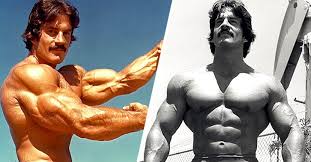
Mike Mentzer popularised High Intensity Training


This time the answer is yes. Scientific research has been conducted into a relatively new field of exercise known as High Intensity Training, or HIT. These studies have uncovered incredible results that you absolutely need to know.

First, High Intensity Training is the premise that by decreasing the duration of exercise and increasing the intensity, you can still get a good workout. Instead of the traditional workouts of mild intensity and long duration, HIT followers workout for about 10 minutes and exert almost all the energy doing so.

The benefits are staggering. Research has shown HIT to increase metabolism and weight loss as well as increase muscle mass faster. The exercises to achieve these results are not the same, but the principles are.

If you want to achieve optimal weight loss, then HIT can work for you. Incorporate sprint intervals into your jog for a month. If you normally jog on a treadmill for thirty minutes, try jogging just fifteen minutes, then every five minutes try to do an all out sprint for thirty seconds.

This simple change in your routine can dramatically improve your results. Not only will you burn more fat during and after exercise, you will sleep a lot better as well. As you get more fit, increase the duration of your workout and decrease the time between sprints.

If you want to increase muscle mass dramatically, then HIT is perfect for you. Instead of doing endless sets of various weight lifting routines, you only need to do three exercises: bench press, seated row and squats.
The bench press is a "core" exercise
These three exercises will work nearly all of your muscle groups.

Start with the bench press. Find a weight you can barely lift ten times. Now cut that weight in half and do ten reps, only take ten full seconds per rep.

That means take five seconds to put the bar up and another five seconds to let the bar down. This will be much slower than you are used to doing the bench press. It will also be a lot harder than you think to get to ten reps.

After the tenth rep, have a spotter help you do two negative reps. This means they will lift the bar for you and you simply have to let it down. It is a lot harder than it sounds.

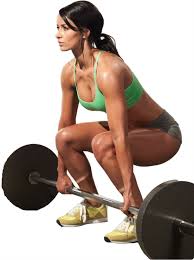
Immediately after finishing the bench press, move to the squats. Follow the same format as with the bench press. Use light weight, move slowly and get the negative reps at the end.

Finally, finish with the seated rows. Follow the same principles as before. Once you are finished your muscles will feel more fatigued than they ever have.

This method of working out has shown incredible results for those who have been following a routine. Try High Intensity Training for just one month and see if you notice incredible results like thousands of others.

Cade Lennox is a fitness and health expert who writes articles about exercise, nutrition and more. He has also authored hundreds of treadmill reviews.

Article Source: http://EzineArticles.com/expert/Cade_Lennox/873575


Article Source: http://EzineArticles.com/5593674

Wednesday, 8 June 2016

Wednesday Video - The Science of Laziness

Why are some people so lazy? Is there a couch-potato gene?

We know that exercise is hard but can there be a genetic answer behind the desire to sit around doing little? this short video looks at that very question and the answer may well be surprising.....


Friday, 3 June 2016

Fat Loss Friday - How to Set Weight Loss Goals – Shaping the Outcome

How to Set Weight Loss Goals: Shaping the Outcome. 


First, Figure Out Your Motivation to Set Weight Loss Goals. Set Weight Loss Goals that Fit into Small Jars and Take Short Moments to Reach. Success in Weight Loss Goals: Keeping the Written Record. Weight loss is going to take time, almost the same time it took to put it on. If you think in that way, then when you are about to set for yourself weight loss goals, with these tips in mind, you will be better able to prepare for the journey ahead.

You can shed pounds without following complicated plans, without eating frozen or liquid meals, without craving your favorite foods, or shelling out hard-earned money. If you want to keep off extra pounds for good, then traveling like lightning isn’t the best way to get there. (After all, it took time to put on the weight.)

Instead climb aboard a slow, steady train. You’ll feel the bumps. You may have some extra stops on the way. You will still reach your destination and enjoy the foods along the way.

First, Figure Out Your Motivation to Set Weight Loss Goals
What's your motivation?


Answer the why, and make it a big why. Why do you want to lose or keep off your weight? If your motivation is to wear that size 8 dress or to fit into those good jeans from last year, then you may setting yourself up not to make the long journey, because you won’t have a strong enough motive to keep the weight off in the future.

On the other hand, if you motivation is to be healthy and feel good about yourself, you will likely make your new eating and exercise habits part of your new lifestyle. It’s lifestyle you are ultimately affecting here. By making this a major reason of your ultimate goal, you will have a stronger motive to achieve it and maintain it.

Set Weight Loss Goals that Fit into Small Jars and Take Short Moments to Reach


Now, as you have begun your journey, it’s time to think about goals. Often people reach for goals that are impossible to achieve, and set themselves up for failure. For example, dropping 35 pounds in two months or swearing not to eat a certain food. Then, when they don’t meet those goals, they easily feel defeated and are apt to give up.

Instead, shoot for goals that are realistic and short term. Then, repeat. I learned this from a friend of mine.

I suggested to her: aim to lose 1 or 2 pounds per week. She retorted in a way that I thought she was joking with me, when she said she was going to lose a half a pound per week. A year later she was 32 pounds less, which represents 23% ahead of her set goal. Though it was over a year mind you, nevertheless, she did an unthinkable task, by breaking it into baby steps. And she kept herself motivated by reaching those doable steps each week and by sometimes exceeding them.

Short term weekly goals. Realistic half pound goals. Amazing. She expected success all along, because she wasn’t over extending herself. A couple less sodas this week. An extra walk or two outside next week.

Success in Weight Loss Goals -- Keeping the Written Record
Keep records of your progress


Another key to her success, I believe, is this: She weighed herself on a consistent day, Saturday morning. This was was to keep herself from worrying about the midweek fluctuations and to never record herself right after a meal.

I think this contributed to her ultimate success. Her goals were measured using a consistent standard. This weekly result she would record in her notebook, along with the few things she did that week to accomplish her result.


To Summarize the Steps on How To Set Weight Loss Goals for Success


First, start with a high-ground motivation. Next, make yourself a simple attainable goal and place it within a doable time-frame. Finally, be consistent in your application of it by recording your results it in a notebook every week.

As the last word, to echo the first thoughts. Weight loss is going to take time, almost the same time it took to put it on. If you think in that way, then when you are about to set for yourself weight loss goals, with these tips in mind, you will be better able to prepare for the journey ahead.

Source: Free Articles from ArticlesFactory.com

Friday, 29 April 2016

Fat Loss Friday - Breaking the Weight Loss Plateau

One of the most frustrating aspects of weight loss is reaching a weight loss plateau. Thankfully, breaking the weight loss plateau is a relatively simple task once you know what causes it. When we first undertake a weight loss goal we tend to lose a lot of weight initially then the amount slowly declines over a period of weeks or months until we reach the point where we stop losing weight altogether, and it's not that we don't need to lose more weight either. This is referred to as a weight loss plateau. 
Why is the weight not coming off?
You know you're doing all the right things but you're just not losing the weight. In the first week of your program you tend to lose the largest amount of weight. Much of the weight loss this first week is actually excess fluid and can constitute as much as 9 lb (4 kg) or more depending on your starting weight. Fluid loss can represent as much as 50% of total weight lost in the first week. There are several factors that contribute to a weight loss plateau including (but not limited to);

· Insufficient Calories Consumed

· Muscle Loss

· Weight Loss

· Lack Of Discipline

· Physical Adaptation

· Exercise Ability

· Over Exercise

· Enhanced Fitness Levels

Lets deal with these one at a time.

Insufficient Calories Consumed 

The human body requires a MINIMUM of 1200 calories per day to function. If you consume less than that (on a crash diet for example), your body will interpret that as being in a famine and will reduce your metabolism (the bodies ability to burn calories) in order to protect itself and be able to survive for longer. This will stop it from burning fat stores. Solution: Maintain a reasonable calorie consumption. Use a BMR (Basal Metabolic Rate) calculator to determine how many calories your body requires per day to maintain itself. Once you have determined approximately how many calories your body requires to operate, reduce you calorie consumption to 500-700 calories less than that without going under 1200 calories. More than a 700 calorie deficit may lead to muscle loss which is the next cause of a weight loss plateau.

Muscle Loss 

All bodily tissue requires energy to maintain itself, including fat. Muscle requires FIVE TIMES the amount of energy to maintain itself than fat does.
You need to build muscle to lose weight
The higher the muscle percentage in your body the greater your caloric needs. Unfortunately, diets sometimes lead to muscle loss. The bodies primary source of energy is carbohydrates, followed by protein then fat. Your muscles are made of protein so if your body runs out of carbs it may turn to muscle as an energy source if those muscles are no being maintained by exercise. Unfortunately, muscle loss leads to a lower metabolism. Solution: Eat a diet rich in protein and exercise in conjunction with your reduced calorie diet to maintain muscle mass and prevent muscle loss. If necessary, vitamin supplements may be utilized to ensure correct nutrition.

Weight Loss 

Huh? Isn't losing weight the whole point? Yes it is! But as you lose weight the number of calories your body requires to maintain itself also reduces. As mentioned earlier, even fat needs calories to maintain itself. Solution: As you lose weight, check your BMR regularly to see how many calories your body requires per day and maintain a calorie consumption around 500 calories less than that. But remember, don't consume less than 1200 calories.

Lack Of Discipline 

After several weeks of a new weight loss program many people tend to lose focus. They start indulging their cravings for unhealthy foods more than they should and they cut corners on exercise, skipping one day under the pretense of exercising twice as much the next day etc. This decreases the BMR and increases calorie intake which effectively stops weight loss.
Stay motivated and disciplined 
Solution: Staying motivated during a weight loss program can be a challenge. One of the best ways to overcome this issue is to find a weight loss buddy. Having someone to exercise with and be answerable to can be an effective motivator. Another great motivational tool is a printable weight loss goal setting worksheet. Print it out, fill it out and place it on the fridge, where you will see it regularly and it will remind you of what you are trying to achieve

Physical Adaptation 

Our bodies adapt themselves to our calorie consumption and physical activity levels. When we begin an exercise regime, our body is required to make several changes to adjust to changing workloads. Our muscles have to rebuild themselves and this requires many calories. But, over time the body finishes adapting and burns less calories for the same activities. Solution: Don't allow you body to adapt. Vary your exercise program by changing the intensity, duration, frequency and type of exercise. If you always do weights then go do some cardio, grab a jump rope and skip for 15 minutes. You can also utilize interval training where you swap and change between different types of exercise for set amounts of time.

Exercise Ability 

Whenever you do an exercise regularly you become better at it and your body requires less calories to perform it. A trained athlete burns less calories playing their sport than someone who isn't trained in that sport. Solution: Once again, don't allow your body to adapt to a single exercise. Mix it up, if you're always doing weights then go for a run, switch from the treadmill to a rowing machine etc.

Over Exercise 

If you exercise too much your body adapts and reaches a point where the extra energy consumed in exercise is offset by a DECREASE in the amount of energy used when not exercising.
Sometimes you need a break
In other words, when you increase exercise intensity, your body decreases the number of calories consumed during the rest of your day. Solution: Allow yourself recovery time. Take a break for a few days with some low impact exercise like swimming or tai chi. When you return to your normal exercise routine, pull back a little and only increase intensity when needed to maintain weight loss.

Enhanced Fitness Levels 

As your fitness level increases, your body efficiency increases and requires less calories to operate. Enhanced fitness causes a reduced resting metabolic rate and fewer calories required for normal daily activities. This is partially because your cardio-pulmonary efficiency is increased and your resting heart rate is lower. Solution: Congratulations! You're officially fit and healthy. You can justifiably feel proud of yourself. Concentrate on mixing up your routine to maintain progress and life will just get better and better! Another thing to keep in mind is that weight loss is not the only aspect to increasing your fitness. It is possible to lose inches without losing weight. This is because if you build muscle through resistance training that muscle weighs MORE than fat but requires LESS space. A person who weighs 200 lbs with 25% lean muscle will be smaller than another person of the same height and weight who only has 20% lean muscle. So in summary there are four main things to remember:

1. Keep track of your BMR (how many calories per day your body needs to maintain itself).

2. Maintain a calorie consumption of 500-700 less than your BMR without going below the 1200 minimum.

3. Engage in exercise to prevent muscle loss.

4. Mix up your exercise program to prevent your body from adapting.

Article Source: http://EzineArticles.com/expert/Julia_Bell/416005

Friday, 15 April 2016

Fat Loss Friday - Is Your Goal Really Weight Loss?

Are you ashamed of your weight? Do you have a goal weight that you want to reach through weight loss? I’d say so, it’s been pushed into our brains many times over and over again that “weight loss” is what we want to accomplish. There are weight loss guides, weight loss supplements, and many other things that push “weight loss”. Many people even set their goals to be at a certain weight. Additionally, the medical community has developed an “ideal weight” chart, which can further add to the confusion about weight loss.


Now, let me ask you a question. Is your goal really weight loss? Unless you are trying to make a weight class for wrestling or some other sport with weight classes, you may think that your goal is weight loss, but it really isn’t. You are trying to lose that flubbery stuff attached to your body called FAT. Correct?
 Scales don't tell the full story


So then, why do we measure our progress by how much we weigh? Why do we step on the bathroom scale and hope that those numbers will be lower than before? You see, our weight is affected by more than just how much fat is on our body. Some other factors include water, muscle, glycogen, and obviously if we have eaten anything earlier or used the bathroom lately.

Our water weight fluctuates constantly. For instance, when we exhale water vapor comes out. When we sweat, we are sweating out water. There are also many more factors that can affect the amount of water in our body. Water is what usually causes those random gains or losses of a pound or two in weight that can make you happy or sad. It is almost physiologically impossible to lose a pound of fat in one day.

One reason the low-carb or no-carb (also called ketogenic) diets are so attractive is because of the large initial loss of weight. However, this weight is not necessarily fat. When carbohydrates are restricted the body has a backup store of them located in the liver and muscles in the form of something called glycogen. The human body can store approximately 400 grams of glycogen. In larger individuals this number can increase. In addition to this, for each gram of glycogen stored in the human body, 3 grams of water are also stored. If you figure it out, this would equate to about 1600 grams (3.5 pounds) of glycogen and water.

When you stop or limit your consumption of carbohydrates, your body starts using its glycogen stores. After a couple of days that 1600 grams (3.5 pounds) of glycogen and water are gone. Also, as an adaptation to the restriction of carbohydrates, your body produces these things called ketones. Ketones also appear to have a diuretic effect, which would mean an even greater loss of water.

In addition to water, if you have been working out lately to speed along your “weight loss” (you mean fat loss, right?) progress you probably have gained some muscle doing so. This gain in muscle can also affect the numbers you see on the scale. Muscle is also more dense than fat.

You may be wondering how you are going to measure your progress now that the scale doesn’t mean as much as it used to. Well, there are several methods to measure your body fat percentage. None of these methods are 100% accurate, but they will be much more useful than the use of a scale.

One of the simplest ways is to use a caliper. You can usually find these at your local sporting goods/fitness shop. If you can’t find them locally, you can order them off the internet. Calipers measure the thickness of a skin fold on your triceps. Then there are directions that come with the caliper that show you how to use the number you get to derive your body fat %.
Try on-line body fat calculators


If you don’t want to go out and buy some calipers, there are body fat % calculators online. The calculator uses the circumference of several parts of your body and then plugs them into a formula developed by the U.S. Navy to derive an approximation of your body fat %.

You can find this calculator here: http://www.weight-loss-resources.com/calculators/bodyfat.html

There are also much more accurate ways to measure your body fat % like buoyancy testing or the use of special lasers.

If you insist on knowing your progress by weight loss and want to use a scale, try to weigh yourself at the same time everyday. Probably the best time would be right when you wake up in the morning and before you do anything.

So, your new goal should be to shoot for fat loss and not weight loss. Don’t necessarily trust the scale all the time as it can be deceiving - your weight is affected by more than just how much fat you have gained or lost. In addition, it is almost physiologically impossible to gain or lose a pound of fat in one day.

Author: Nathan Latvaitis

Monday, 4 April 2016

Monday Muscle - Simple Ways To Overcome Muscle Building Plateaus

When there is a thing which is going to be the single most disheartening issue which you will deal with in your fitness career, muscle building plateaus are it. Things are all going great - you are working hard, making huge strength gains, and appearing more muscular each day. You feel just as if you are on top of the planet. And then, almost everything stops. You no longer are generating the gains you used to as well as you have even began to lose weight rather than gain weight.
Building muscle is more than just lifting weights


When this describes your position, then congratulations, you have just came into the muscle building plateau. This is something which happens from time to time in any fitness program unless you are especially performing things to avoid it and luckily, can be beat with a bit of careful planning. Unfortunately though, many people get stuck at this time and eventually just wind up tossing in the towel. If you desire to avoid permitting this happen to you, then read on since the following sneaky hints will help you outsmart that plateau as well as get back on track to noticing the outcomes you deserve.

Take a training break. 

Have a break? How could that be? That's very likely what most of you are pondering. If you're not discovering improvement, why on earth should you cease working out entirely? The scientific explanation for this is mainly because oftentimes, the main reason you are not seeing improvement is mainly because you are near to becoming overtrained.

Yes, maybe you have been maintaining fine post-workout nutrition as well as making certain you get a minimum of one day off weekly to rest, but typically this is just not sufficient. As the months pass by the fatigue accumulates and eventually the body just needs a full solid week off.

Have that week off and observe. You would be surprised at what might just happen. Many people discover that following a scheduled rest week they come back stronger compared to when they left off and then their old personal bests stay in the dust as they progress onwards.

Re-evaluate your workout split. 
Take the time to plan 

Another good way to conquer the muscle building plateaus is to re-evaluate your workout split. You must ideally be changing your exercise routine around once every 4-6 weeks so when it has been a while since you have done so, now's definitely the right time. If you are carrying out a complete training session, take into consideration an upper/lower split instead. Or, when you are performing a body part split, try out that complete workout at this time. Supplying your muscles this new scenario to deal with usually gets them sitting upright and reacting once more


Read more: Simple Ways To Overcome Muscle Building Plateaus http://www.sooperarticles.com/health-fitness-articles/exercise-articles/simple-ways-overcome-muscle-building-plateaus-1055202.html#ixzz43WmvbOk5
Follow us: @SooperArticles on Twitter | SooperArticles on Facebook

Thursday, 30 July 2015

Ten Most Frequently Asked Questions About Weight Loss - Part 8 Surgical options

8. How many pounds overweight should I be to be considered for a surgical weight loss program?
Weight loss surgeries-also called bariatric surgeries-can help treat obesity. You should only consider surgical treatment for weight loss if you: have a BMI of 40 or higher, have a BMI of 35 or higher and weight-related health problems, or you have not had success with other weight-loss methods.

Body mass index is a key index for relating a person's body weight to their height. The body mass index is a person's weight in kilograms (kg) divided by their height in meters (m) squared.

Common types of weight loss surgeries are:
Roux-en-Y gastric bypass. The surgeon uses surgical staples to create a small stomach pouch. This limits the amount of food you can eat. The pouch is attached to the middle part of the small intestine. Food bypasses the upper part of the small intestine and stomach, reducing the amount of calories and nutrients your body absorbs.

Laparoscopic gastric banding. A band is placed around the upper stomach to create a small pouch and narrow passage into the rest of the stomach. This limits the amount of food you can eat. The size of the band can be adjusted. A surgeon can remove the band if needed.

Biliopancreatic diversion (BPD) or BPD with duodenal switch (BPD/DS). In BPD, a large part of the stomach is removed, leaving a small pouch. The pouch is connected to the last part of the small intestine, bypassing other parts of the small intestine. In BPD/DS, less of the stomach and small intestine are removed. This surgery reduces the amount of food you can eat and the amount of calories and nutrients your body absorbs from food. This surgery is used less often than other types of surgery because of the high risk of malnutrition.

If you are thinking about weight-loss surgery, talk with your doctor about changes you will need to make after the surgery. You will need to: follow your doctor's directions as you heal, make lasting changes in the way you eat, follow a healthy eating plan and be physically active, and take vitamins and minerals if needed.

You should also talk to your doctor about risks and side effects of weight loss surgery. Side effects may include: infection, leaking from staples, hernia, blood clots in the leg veins that travel to your lungs (pulmonary embolism), dumping syndrome, in which food moves from your stomach to your intestines too quickly, and not getting enough vitamins and minerals from food

Article Source: http://EzineArticles.com/?expert=Dr_Scott_Lewis

Thursday, 9 July 2015

Ten Most Frequently Asked Questions About Weight Loss - Part 1

This is a long series so I'm going to break it up into easy to use chunks of information.


1. How do I know if I'm overweight and really need to lose weight?

People used to believe there was an "ideal" weight for every height. If you were 5'4", you were supposed to weigh X. If you were 5'0", you were supposed to weigh Y. Now we know better.The numbers on the bathroom scale don't tell you whether you are overweight. And there is no set number that says you are too thin, too heavy, or just right. Scales may be handy, but a better way to tell if your weight is healthy is to measure the proportion of fat in your body to lean body mass. Health professionals look at your body composition-including your muscles, bone, and body fat-for someone your age, sex, and height. Some people use a tool called the body mass index, or BMI, to help decide whether they are overweight. For example, if you are a woman and your BMI is 27 to 28 or higher, you are considered overweight.

Body mass index is a key index for relating a person's body weight to their height. The body mass index is a person's weight in kilograms (kg) divided by their height in meters (m) squared.
Overweight is defined as a BMI of 27.3 % or more for women and 27.8 % or more for men. Obesity is defined as a BMI of 30 and above. (A BMI of 30 is about 30 pounds overweight.) Note, however, that some very muscular people may have a high BMI without undue health risks. 

Another way to determine your fat-to-lean muscle mass ratio is through the use of a caliper. A caliper is an instrument consisting essentially of two curved hinged legs, used to measure thickness and distances. It is used to pinch a part of your arm to see how much fat and lean muscle you have.


Article Source: http://EzineArticles.com/?expert=Dr_Scott_Lewis