Showing posts with label shaping muscle. Show all posts

Monday, 5 September 2016

Monday Muscle - Muscle Memory - Can Muscles Actually Remember?

Ask any bodybuilder what muscle memory means and they will readily answer that it is the ability to regain muscle mass more quickly after a period of inactivity than it took to gain the same mass originally. However, if you type the term "muscle memory" into a search engine on the internet, you will find there are many different interpretations of this term. And depending on which authority you consult, the meanings are diverse.

Some believe that muscle memory is simply the application of learned processes much like a baby learns to walk or feed itself.
Repetition can bring success
After many repetitions of the same action, parts of the body are able to react without the person thinking about what they are doing, and the action involved seems to come naturally. If this is true, then muscle memory is actually a neurological function that is built into all humans. According to Andersen, et al. (2005), some studies have shown that neurological and physiological changes occur during skill training, but not during strength training alone.

Others believe that there is an actual physiological change that occurs in the muscles during strength training, altering the function of certain muscle fibers, causing them to bring about muscle growth more readily than before training. In both cases, the muscle's ability to regain both strength and size may be enhanced if training is stopped for a period of time and then started again.

Resistance training and weight training require a combination of strength and motor skill. As a person learns how to perform certain exercises, it is important to learn the right patterns of movement that will achieve the desired muscle growth (Jensen, Marstrand & Nielsen, 2005). Many people define muscle memory as muscular hypertrophy, kinesthesia, proprioception or a result of neuromuscular facilitation. To some extent, all of these definitions play a part in muscle memory. Let's start by defining these terms and showing their interaction with one another to facilitate "muscle memory" during strength training and bodybuilding (as well as other types of exercise).

Muscular Hypertrophy Hypertrophy is the increase of the size of an organ or select area of tissue that occurs due to an increase in the size of cells. Muscular hypertrophy occurs through increased contractile proteins. Myosin heavy chain isoforms, or MHCs, refer to the types of protein seen in a given muscle fiber.

MHCs determine how the muscle fiber functions.
Some moves give more muscle
There are two types of MHCs - IIX, which are neutral until they are put to use by the muscle, and IIA, which have a specific purpose of causing muscle growth. Certain MHCs undergo a change in response to resistance exercise and serve as a reservoir of sorts for muscle hypertrophy because they can transform themselves into the types of fibers which grow easily in response to training (Haycock, 2004). Many scientists believe that once these types of muscle fibers are generated by regular resistance or weight training, they remain in the muscle, waiting to be reactivated. If a person does not exercise, or detrains, for a long period of time, and then begins an exercise regimen again, the fact that there are an abundance of muscle-growing fibers already present from previous workouts helps to regain muscle more quickly the second time around. In fact, certain types of strength training advocate detraining for a period of time in order to facilitate this type of response in the muscle, therefore eliminating the possibility of hitting a plateau that is difficult to overcome (Haycock, 2002). Without that plateau, a bodybuilder is better able to continue growing in muscle size and strength.

Kinesthesia Kinesthesia is the body's ability to sense the position and movement of all parts of itself, such as limbs and muscular tension. For example, if a person closes their eyes and holds their arms straight out in front of them, they are able to tell without looking if their palms are facing up or facing down. For a bodybuilder this translates into the body's ability to know the precise location and position to stop during a repetitive exercise in order to achieve the right amount of flex and tension to maximize the results. If you've taken part in a good program of resistance training, you will retain the ability to repeat the correct movements even if you stop training for a while.

It is important to note, however, that learning the correct way to perform an exercise is the key to achieving the best results. If a person learns the wrong movements, they will not achieve the same results. It is best to use a personal trainer or receive some sort of instruction when learning to exercise the different muscle groups, because learning the wrong form can cause damage or result in a workout that does not meet the exerciser's goals. And the time and effort involved in unlearning bad technique can be substantial and can totally demoralize the individual.

Proprioception/Neuromuscular Facilitation Proprioceptive Neuromuscular Facilitation is the term used to describe stretching exercises that increase range of motion in a muscle, thereby increasing strength and flexibility. It is often used as therapy after an injury or long periods of inactivity such as bed rest. By stretching and contracting and rotating a muscle, sufficient use can be regained even though the muscle has not been used as much as it would be normally, thus allowing a person to regain normal function. Stretching is an important part of physical fitness because it prepares the muscles for the physical activity involved in performing certain movements. It can reduce muscle strain and the danger of injury during a workout session. In order to be in top physical condition, a person must have good flexibility. Of course, there are different types of stretching for different routines.

Is Muscle Memory a Myth or Fact? Many articles and studies exist that discuss whether muscle memory in relation to bodybuilding and weight training is a myth. Some experts believe that muscle memory is simply a normal function of the body, that it is more related to the way the brain sends signals when performing any movement.
Correct movements mean optimum benefit
However, we'll use the term to define the memory of a learned pattern of behavior, such as how to make the correct movements while performing resistance training exercises to obtain optimum benefit.

Based on my interpretation of the literature, as well as my own experience, muscle memory is real and does have an impact on a person's ability to regain muscle mass quickly after a period of no exercise when they previously practiced a regular exercise regimen. A good analogy is learning to ride a bicycle or learning how to swim - once a person learns how to do these things, even if they don't do them for a long period of time, they are able to operate the pedals and retain their balance on a bicycle, or kick their feet and rotate their arms to stay afloat when swimming.

Sources:
Andersen, L. L., Andersen, J. L., Magnusson, S. P., Suetta, C., Madsen, J. L., Christensen, L. R., & Aagaard, P. (2005). Changes in the human muscle force-velocity relationship in response to resistance training and subsequent detraining. Journal of Applied Physiology, 99, 87-94.
Staron, R. S., Leonardi, M. J., Karapondo, D. L., Malicky, E. S., Falkel, J. E., Hagerman, F. C. & Hikida, R. S. (1991). Strength and muscle adaptations in heavy-resistance-trained women after detraining and retraining. Journal of Applied Physiology, 70, 631-640.
Trappe, S., Williamson, D., & Godard, M. (2002). Maintenance of Whole Muscle Strength and Size Following Resistance Training in Older Men. Journal of Gerontology: BIOLOGICAL SCIENCES, 57A (4), B138-B143.

Darrin Clement runs http://worldfitnessnetwork.com, a blog covering the Art and Science of Building Lean Muscle Mass and An Awesome Physique. Sign up and get our free e-book on bodybuilding.

Article Source: http://EzineArticles.com/expert/Darrin_Clement/96563

Monday, 22 August 2016

Monday Muscle - Muscle Building Nutrition - Stop Training Like a Pro! Here's The Right Strategy

Speaking of muscle building, most people rely more on advice and muscle building programs. But one thing they've forgotten is the muscle building nutrition. No matter how intense your workout is, you will never see development unless you pay attention to everything that you eat. Some people said training like a pro body builder will give you the muscle of the body builder. But why is it there are still millions of people searching for advice on how to build muscles? If training like a body builder will give you the figure that you desire, then why is it there are still people who are now spending long hours on the gym just to get the figures they desire?
Consider proper nutrition for your body


Muscle building is not about idolizing professionals. Yes, you can follow some of their advise but you should be warned because not all of them are true and effective. In the first place you should understand that most body builders were not trained naturally. Maybe some of them are using steroids to enhance their resistance. Besides, they're genetically gifted with strong bodies. People don't have the same body types. And to tell you the truth, training like a body builder will only make you suffer from muscle cramps.

So what are you going to do after you've read the information above? Of course, there's no other way to build muscles but to consider your nutrition. Until now, there are still mistakes people did when considering their diets. First and foremost, people are afraid of fats, isn't it? You can't deny that you also hate fats too. Fats are not poisons so you don't need to avoid it. Plus, would you know that there are good fats and bad fats? Good fats are the ones found of vegetable oil, nuts and olive oil. While on the other hand, bad fats are the ones found of fast food including burgers, steaks and fries.

Just like losing weight, you also need to plan your meals. But this time, you don't have to reduce the serving of your regular meal. Instead, you have to add or as much as possible consume the maximum serving an hour before the work out. For best results, it is better to divide your meals into 5-6 meals every day. This strategy is used simply to ensure that your body is getting the required nutrients.

Maybe you heard it many times. But it's true that protein is important for building muscles. Why? It's because protein is the one that provides amino acids to the body. On the other hand, amino acids are the ones that provide nitrogen which is therefore needed in muscle building process.

High protein foods:
Choose healthy high protein foods


• Eggs
• Nuts
• Lean meats
• Turkey
• Chicken
• Nuts and beans

Take note that muscle building nutrition plays a vital role in muscle building. But apart from that, you should also have a continuous workout. The proper nutrition and intense workout when combined can definitely bring good result though you should leave 2 days for your rest. Rest is important to regain the energy you have lost in the workout. But of course, don't forget to keep your body hydrated.


By Russ D. Edwards

Article Source: http://EzineArticles.com/expert/Russ_D._Edwards/416640

Monday, 8 August 2016

Monday Muscle - 7 Top Muscle Building Nutrition Food Sources To Gain Muscle Mass


You can't actually neglect muscle building nutrition in your muscle building program. But the thing is, many people avoid the topic of nutrition when it comes to building muscles. They think it's complicated. It's simply a matter of obtaining the right information because it is in fact easy to find the right muscle building nutrition foods to complement your workouts. What's more, your nutrition can even make your muscle building program more successful. With muscle building nutrition sustaining your sufficiently, your workouts would be less tedious. That's right. Eat more foods for building muscles and you can work out less. What are the top muscle building foods to help you gain strength and muscle mass?

1. Lean beef. 

This ought to be a staple in your meals if you want to build muscles fast. Loaded with zinc, iron, B- vitamins and other nutrients that promote the growth of your muscles, you can't skip lean beef in your nutrition. Other than that, it also provides high-quality nutrition for growing your muscular physique. Take note that not all proteins are equal, but proteins in lean beef contain high amounts of amino acids that work in tandem with insulin to boost muscle growth. If you're trying to lose weight, lean beef is a valuable option for your nutrition, too. Eat 3 oz of lean beef and you'll get the same amount of proteins found in 1.5 cups of beans. However, you'll get half of the amount of calories.

2. Skinless chicken. 
Get your nutrition in order

Chicken, like beef is a good source of high quality protein which is essential for the maintenance and repair of muscles. It also aids in bone health and weight loss. You can prepare delish meals as well because chicken is easy to cook and prepare. At the supermarket, you'll find meat packaged in single serving sizes. You can season and cook it quickly.

3. Cottage cheese. 

It's a perfect nutrition to maintain the health of your muscles because it is an excellent source of pure casein protein. Casein, as a slow digesting protein can sustain your muscle health even if you go on long periods without eating.

4. Eggs. 

Other than being a good source of high quality protein, eggs also contain the right kind of fat, nine essential amino acids and Vitamin D. It's food that truly provides excellent value for your money. Contrary to what some studies have reported, eggs are not unsafe for your health.

5. Whey protein. 

Supplements containing whey protein are the most popular in the fitness industry. They are a fast, convenient and affordable source of protein.
Whey protein comes in many flavors
Bodybuilders take whey protein supplements in the morning after waking up, as a post-workout supplement and as a supplement to mix with their meals. A scoop of whey protein in your muscle building shake is effective for gaining muscle mass. Then again, see to it that whole foods are your main source of high quality protein, augmented by whey protein supplements.

6. Tuna and other fish

These foods are also rich in protein and omega 3 fatty acids. Being low in fat and high in omega 3 fatty acids, fish also aid in fat loss and revs up your metabolism.

7. Oatmeal. 

It's low glycemic index (GI) value makes oatmeal an excellent source of carbohydrates. It's also minimally processed as a muscle building nutrition food

Article Source: http://EzineArticles.com/expert/Walter_H_Menuet/1833556

Monday, 1 August 2016

Monday Muscle - Do You Really Need to Spend Hours at the Gym to Build Muscle?

To build muscle you do not need to spend too much time at the gym. You actually have to spend less time lifting weights and more time recovering, that is, sleeping and doing nothing physically demanding.

Most people think they have to train for hours because bodybuilding magazines and professional bodybuilders promote some ridiculous training routines that will not give optimal results to a normal person.
Pills are not the answer


The truth is that professional bodybuilders do work out that much, but they can only do it because of two things, which are privileged genetics and using steroids.

Natural bodybuilders can't recover as fast as these professional bodybuilders, simply because steroids help these people have unbelievable progress.

On the other side, since we are not considering using steroids to enhance our performance, it is important to know that you can have important gains in muscle by doing one or two whole body workouts every week.

These workouts shouldn't even last too long, because your body can only function optimally in these sessions for about 45 minutes.

What you can do is follow a routine that uses compound movements. You should train to failure in order to promote muscle growth, since your body will have absolutely no reason to increase muscle mass if there is not enough stress.

Now, the frequency of your workout depends on your rate of recovery.
Recovery equals muscle
You're going to be pretty tired after working out the way it was mentioned above. You should have your next workout until fully recovered.

To measure this, do the next workout after three days. If you can beat your previous session, that is to carry more total weight during the same time period, then you were fully recovered. If not then try to decrease your training frequency until you find what's optimal for you.

If on the other side you actually were fully recovered, then try increasing your training frequency. Some people need as much as seven days to be fully recovered, but you might be an exception, so test it out.

By doing these kinds of workouts you will gain considerable muscle mass, while only doing one or two workouts per week. You don't need to spend hours at the gym in order to gain muscle. You just have to train smart, eat well, and sleep enough.


Article Source: http://EzineArticles.com/expert/Dan_F._Johnson/754138

Monday, 25 July 2016

Monday Muscle - Fail To Plan, Plan To Fail: Top 10 Reasons Why Bodybuilders Fail To Grow

Are you frustrated with the lack of growth you’re experiencing? Then read on…

FACT ONE 

What state are you currently in?
The reason bodybuilders don’t grow is because they don’t know what state their body is in to start with. Without accurately assessing your current state you cannot determine which system of training will help you reach your goals.

FACT TWO 

Bodybuilders don’t know how to change the state they are in to induce growth. . Guess what? If you do not train properly you will never stimulate you muscles to grow. Improper training is one of the biggest reasons why most people never get the desired results form training.

FACT THREE 

Bodybuilders do not know what route to take to get there (build muscles). Most bodybuilders have no real system that changes as their body gets used to the training stress they are currently handling. They walk in the gym, pick random exercises and rep ranges, put their time in and come home. Where is the science in that?

FACT FOUR 

(which occurs primarily with steroid users who artificially build their muscles) is athletes can’t keep the muscles they built with drugs because they don’t know how to train or eat in the first place. Once they stop taking drugs their muscles disappear, leaving them skinny, fat and in a worse state than if they had never used drugs.

FACT FIVE 

Most bodybuilders do not regularly monitor biofeedback to determine when to change their training to continue growing.
Record keeping is vital to track growth
If you are not keeping records of your training there is no way you are maximizing your gains. Journal keeping allows you to track your process over years enabling you to fine tune your training and keep the gains coming continuously.


FACT SIX 

Most people select exercises that work only work their strengths. Seldom or rarely do they work on their weaknesses and create a truly outstanding balanced physique.

FACT SEVEN 

Bodybuilders get sucked into bogus well marketed supplements and glitzy magazine ads to look for quick fixes instead of implementing a systemized, training and nutrition program.

FACT EIGHT 

Most people do not generate enough intensity in the gym to force the body to grow. Intensity is a very misunderstood term in bodybuilding and most individuals are kidding themselves into believing they are training intensely enough to really grow.

FACT NINE 

Very few bodybuilders actually invest in professional specific coaching to help them achieve their best results. Consider this, what athlete in the world got to the top of his game without coaching? I will tell you, absolutely none! Many bodybuilders erroneously think that they can maximize muscle growth without coaching. Guess what? They are dead wrong!

FACT TEN 

Don't let your ego get in the way
Most people let their EGO get in the way of learning the correct and most efficient way of training. They do not listen to or follow sound science or consider what other people have to say. They spend their time shooting down authorities in the sport or spouting off about their own hare brained training routine. Great athletes are life long learners. They check their ego at the door and are always looking for ways to improve, integrate and apply new training information.

I could go on about these failure reasons for a whole book but you get the idea. Analyze your own thoughts and training and see if there is anything holding you back. Then eliminate your weaknesses and move forward on the path to greatness. By constant and honest self analysis you can be sure to achieve greatness in any field.

True bodybuilding is about right training, nutritious eating, a positive mental outlook, and a deep respect for yourself and others.

.

Article Source: By Wade McNutt http://EzineArticles.com/expert/Wade_McNutt/40585

Monday, 11 July 2016

Monday Muscle - How To Bench Press 225

Today I will be teaching you how to bench 225 pounds.

Step 1: Get a training partner. 
Train with a partner

I put this as number one because you need someone who is going to challenge you. Not only this, but you need someone that is going to be there to spot you if the weight is too heavy and it gets stuck on you. You have to be fearless in the bench press. If you are bench pressing alone and you are scared the weight is going to get stuck on you, then you will not use as much weight as you possibly can.

Step 2: Get on a program. 

A 225 bench press is not miraculous by any standards, but it is definitely a step in the right direction. If you tell a person that you have a 225 bench press, they will definitely be impressed to say the least. The reason that you need to get on a program is because you need to develop overall strength. You do not want to have toothpick legs while your upper body is the size of a house. Getting on a program will teach you the essentials for weight training. Whether this is switching up volume, sets, or reps.

Step 3: Start small. 

A big mistake that many people make when on the adventure of increasing their bench press is that they start too big. The idea of strength training is to make gradual gains every week. You may want to start each week by adding 5 pounds, after starting at a weight that you can easily manage. After this, you may want to add 2.5 pounds per week. It shouldn't be a surprise that many people should start with just the bar (45 pounds) and work up slowly from there adding 5 pounds per week. This will not only help you not plateau, but it will improve your form and avoid injuries until your muscles and joints get used to a heavier weight.

Step 4: Be consistent. 
Be consistent

This is the most important step. If you are not consistent with your training, you are going to end up with a lousy bench press. You have to bench press at least one time a week. This will improve your form and it will get you better at the movement. If you are not consistent with your training you will never make any progress. Even if you are not increasing the weight each week, that is okay. The key is to stay patient and keep hitting the weights week in and week out. Eventually your numbers will start to increase.

Article Source: http://EzineArticles.com/expert/Jeff_Keller/2281961

Monday, 4 July 2016

Monday Muscle - Can High Intensity Training Help You?

Workout tips and weight loss advice can be found everywhere you look. They are online, on television, in advertising and just about anywhere you turn. But is there any value in any of these tips?

Unfortunately, the answer is generally no. Most people offering their advice are more interested in taking your money than helping you lose weight or get healthy. It really is sad but all too true.

So are there any good health tips online? Have any studies led to fitness breakthroughs? Is there something all the scam artists don't want you to know?
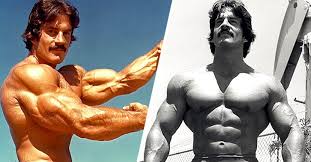
Mike Mentzer popularised High Intensity Training


This time the answer is yes. Scientific research has been conducted into a relatively new field of exercise known as High Intensity Training, or HIT. These studies have uncovered incredible results that you absolutely need to know.

First, High Intensity Training is the premise that by decreasing the duration of exercise and increasing the intensity, you can still get a good workout. Instead of the traditional workouts of mild intensity and long duration, HIT followers workout for about 10 minutes and exert almost all the energy doing so.

The benefits are staggering. Research has shown HIT to increase metabolism and weight loss as well as increase muscle mass faster. The exercises to achieve these results are not the same, but the principles are.

If you want to achieve optimal weight loss, then HIT can work for you. Incorporate sprint intervals into your jog for a month. If you normally jog on a treadmill for thirty minutes, try jogging just fifteen minutes, then every five minutes try to do an all out sprint for thirty seconds.

This simple change in your routine can dramatically improve your results. Not only will you burn more fat during and after exercise, you will sleep a lot better as well. As you get more fit, increase the duration of your workout and decrease the time between sprints.

If you want to increase muscle mass dramatically, then HIT is perfect for you. Instead of doing endless sets of various weight lifting routines, you only need to do three exercises: bench press, seated row and squats.
The bench press is a "core" exercise
These three exercises will work nearly all of your muscle groups.

Start with the bench press. Find a weight you can barely lift ten times. Now cut that weight in half and do ten reps, only take ten full seconds per rep.

That means take five seconds to put the bar up and another five seconds to let the bar down. This will be much slower than you are used to doing the bench press. It will also be a lot harder than you think to get to ten reps.

After the tenth rep, have a spotter help you do two negative reps. This means they will lift the bar for you and you simply have to let it down. It is a lot harder than it sounds.

Immediately after finishing the bench press, move to the squats. Follow the same format as with the bench press. Use light weight, move slowly and get the negative reps at the end.

Finally, finish with the seated rows. Follow the same principles as before. Once you are finished your muscles will feel more fatigued than they ever have.

This method of working out has shown incredible results for those who have been following a routine. Try High Intensity Training for just one month and see if you notice incredible results like thousands of others.

Cade Lennox is a fitness and health expert who writes articles about exercise, nutrition and more. He has also authored hundreds of treadmill reviews.

Article Source: http://EzineArticles.com/expert/Cade_Lennox/873575


Article Source: http://EzineArticles.com/5593674

Wednesday, 29 June 2016

Wednesday Video - How Much Rest Between Sets? (NEW STUDY)

So you've in the middle of your set in the gym. You've got to rest between them and while you're resting before the next set you start thinking. "How much should I rest between my sets?". "Is it 1 minute or 3 minutes or somewhere in between?" Hmm. What time is best for your muscles?

A new study (as of 2016) says something that goes against the norm. This short video explains it all


Monday, 27 June 2016

Monday Muscle - How I Blasted My Arms Past The 18 INCH Mark Without Drugs!

Picture this! You embark on a new training regime focused specifically on building your arms. You follow the best nutritional practices, train like a maniac, and in just over two months you add just over an inch to each arm. Sounds too good to be true, doesn’t it?

While up until a few months ago I would have been a bit skeptical myself until I experienced the above scenario firsthand. That’s right! After 18 years of training, thousands of hours in the gym and hundreds of training routines I finally discovered the secrets to building truly impressive guns.
Build biceps to be proud of


Let’s qualify a few things first. I have logged over 20,000 hours in the gym training people as well as I have written one of the most popular natural bodybuilding books of all time Freaky Big Naturally. I have won 5 divisional titles in 4 different weight classes including 4 overall trophies and a National Championship.

I have had the good fortune to train with some of the worlds’ best coaches and on occasion rubbed shoulders with many of the legends of bodybuilding such as Franco Columbu, Frank Zane, Larry Scott, Lou Ferrigno, and many of the champs of today.

Now you would think after all this I would really know how to build arms to be proud of but the fact is… I DIDN’T!!!

You see although I have learned how to build a great physique even though being “genetically challenged”, my arms always lagged behind the rest of my physique. I tried all the strategies, philosophies, and training styles possible. I bombed, blasted, and fried my arms every possible way I could. Although my arms did look good and were above average they still had never reached the sleeve busting, jaw dropping, stove pipes that every trainee desires.

Now I am not one to quit and even though I had been at it for 18 years I was not about to give up. I knew there had to be a way to increase the size of my arms, without resorting to the use of steroids or other drugs. Fortunately, I finally cracked the code on building massive guns to be proud of. Here’s how I did it.

First since I’ve tried everything I decided to do the exact opposite of whatever one else is doing. That meant instead of training 4-5 times a week to build size. I decided to train 6 times a week.

Since so many people are following low volume high intensity routines (and getting nowhere fast) I decided I am going to do mega-volume with moderate intensity. That’s right I stopped training to failure completely and I dramatically increased the amount of sets I was doing for my arms directly and indirectly.

How many sets? How about 30-40 sets per workout?
Target your biceps directly & indirectly


How many reps? I kept my reps in the 6-10 range per set.

NO drop sets, forced reps, negatives, partials, or anything else.

How many times per week? I did two full arm workouts per week plus I hit the arms indirectly on the other days when I trained shoulders and legs on two days and chest and back on the other two days. So my arms got trained every single day!!!

Because I was hitting the gym with so much frequency and volume it would be impossible to train to failure. So I would just train each set until the last rep seemed tough but it was certainly not an all out effort.

Needless to say the routine worked like gangbusters. Every workout I kept adding weight to the bar or reps to each exercise. I did the same exercises each workout for a whole month and then I switched the exercise to a new set on the next month.

What happened?

I packed on over 12 pounds of muscle and 1 inch on each arm. My left bicep (the bigger of my arms) measured 18 inches cold. The right one is a little smaller and I am working hard on blasting that one over the 18 inch mark as well. Even so these measurements are not too bad for a guy who barely makes 5’8” and weighs 205lbs.

Finally, people are expressing positive comments about my arms. The comments used to be “if you could only bring up your arms you would look great”. Boy after 18 years it’s great to hear. Wow look at how thick your arms are!

I also want to add that I followed a very specific diet protocol during this training. Each day I consumed about 1800 calories.
Quality nutrition is also important
And once per week on my non-training day I consumed about 6000 calories. This way I could stay lean without adding fat while I got bigger and stronger.

Here’s the really shocking fact that has most seasoned veterans of the gym stunned and mystified. I only consumed between 50-80 grams of protein per day. However almost all of this protein came from live protein sources such as Hemp protein.

So there you have it. It is possible to build 18 arms without drugs. I have done it and you can too. Remember don’t let anyone steal your dreams.

Wade McNutt

Natural National Bodybuilding Champion

IFBB Mr. Universe Competitor

Wade McNutt is a Natural National Bodybuilding Champion and an IFBB Mr. Universe World Champion. He combined the secrets of Eastern Yoga Masters with, scientific, muscle building to produce a revolutionary new health system, called Freaky Big Naturally, find out more athttp://www.freakybignatural.com

Article Source: http://EzineArticles.com/expert/Wade_McNutt/40585

Monday, 20 June 2016

Monday Muscle - How To Mix The Best Ingredients For The Ultimate Muscle Building Shake

When people think of muscle building, they usually imagine barbells, dumbbells, and workouts but give little thought to the role nutrition plays in muscle building. This has led many an aspiring muscle building enthusiast to give up in frustration when he or she sees little or no result after months of hard work at the gym.

In contrast, professional body builders know the value of proper nutrition and almost as a whole pay as much attention to what they consume as they do to their workouts.
Supplements can help 
They not only eat a well-balanced diet but also augment it with protein-rich shakes and powders that their aching muscles need after workouts. If you want to develop strong and well-developed muscles, you should the same. All types of ready-made preparations are available at places like wholefoods but you will not get a fraction of what you can get if you prepare muscle shakes yourself. Fortunately, it is quite easy if you know what ingredients you need as we show you below.

· Whey Protein Powder - 

The undisputed king among protein sources, whey protein is loaded with protein. No serious muscle building fan should be without it. Period!

· Greek Yogurt - 

Also high in protein but low in sugar, this is a nice addition to a shake that will enhance the overall taste of the shake.

· Frozen berries - 

Known for their high antioxidant content, berries also blend beautifully in a shake and give it a thicker milk-shake like texture.

· Ground flaxseeds - 

High in healthy omega fats, they provide an easy and fast way of consuming the healthy fats your body needs and craves.

· Dried coconut - 

Coconuts make a healthy addition
Known for its tasty flavor and energy enhancing qualities, this is another source of healthy fats you don't want to be without.

· Natural nut butter - 

Nothing beats nut butter as a source of healthy fat and as an easy way to give your shake a creamy tasty flavor. Make sure you choose almond or peanut butter variety.

· Cottage Cheese - 

This is another fine ingredient that can serve as an alternative to or as a substitute for Greek Yogurt.

· Dry Ground Up Oats - 

A great source of energy releasing carbohydrates, they lower cholesterol level among other health benefits. Best of all, you will not notice any difference in the taste.

· Bananas - 

Are such a rich source of potassium that they should always be included in all shakes. They also improve the taste significantly and keep your muscles healthy.

· Xanthan gum - 

A tiny amount of this is all you need to turn the mix into a very thick muscle building milk shake. It is an essential component to any shake.

· Milk - 

Finally, milk will supply your muscles with calcium and protein while also helping to make the shake thinner.

The above ingredients are all you need to prepare a muscle shake high in protein and other essential nutrients that your muscles and body desperately need. If you regularly consume a shake using the above set of ingredients while also maintaining a regular workout routine you will soon wake up one fine morning to stare at yourself in the mirror wondering if that impressive physique with lean and well-defined muscles is really you. It is really within your reach if you regularly exercise and nourish yourself with foods high in proteins and other essential nutrients.

Optimize your performance in life. Choose your nutrition wisely to give you energy and mental clarity.


Article Source: http://EzineArticles.com/expert/Walter_H_Menuet/1833556

Monday, 6 June 2016

Monday Muscle - Muscle Building Tips: Do's and Don’ts

Packing on Muscle mass involves a lot of dedication and care. At times, trying too hard can have its negative effects too. Right guidance and proper techniques make the perfect recipe to MUSCLE BUILDING. Muscle Building is no joke, but at the same time, very much possible. The bottom line is to workout in the right direction and not to harm your body. Here are some Do's and Don’ts for Muscle Building.

Muscle Building Tips: Do's and Don’ts


1) Popping a pill to reach your health and fitness goal is not the answer!
Popping pills is not the answer
Results are temporary and effects the body adversely in the long run.

2) Remove the tag " Short cut" from your workout schedule. There is no such thing as quick-fix. Dedication and hard work hold the key for MUSCLE BUILDING.

3) Dietary Supplements can be helpful in achieving your goals. Supplementation is designed to supplement your healthy eating and exercise habits.

4) Don’t go in for any supplement you come across. Before taking a supplement, consult your trained or a physician. Always buy supplements from a reputed DRUGSTORE. Do your research before taking in a supplement.

5) Supplements shouldn’t be misunderstood as steroids. Steroids should be a BIG NO. Gather more knowledge on supplements at http://www.weightloss-health.com/Supplements.htm

6) Muscle Building Diet: It occupies a prominent area in MUSCLE BUILDING pie-chart. You should be highly careful related to your muscle building diet.
The right diet can be key
Always ask your trainer to write down a diet schedule for you.

7) Give rest to your body between two sets, say for two minutes.

8) Not work on more than two muscle groups at a time. Train those muscles in a group which work with each other. This technique has proven to be effective. For e.g: Chest and Triceps or biceps and backs.

9) The most effective time to do muscle building exercises is in the morning. You have consumed a lot of carbs by evening. So, carbs become the source of energy for you when you do your exercises in evening. But in morning, body depends on its alternative source i.e FAT for energy. Hence fats get burned up more in morning.

10) Last but not the least, Don’t be biased to any body part. Proper balance is a necessity. Having big upper body and skinny legs is no good. Work out on entire body.


Source: Jasdeep Singh Free Articles from ArticlesFactory.com

Monday, 30 May 2016

Monday Muscle - Why Training Different Parts Of A Muscle Is Outrageous

Training a certain part of a particular muscle is ridiculous as it goes against the basic laws of anatomy and physiology. It is physically impossible to dissect a muscle and only train part of it. Here’s why.

If you ever spend any time in a gym you will probably here questions asked like…

“How do I build up my inner pecs?” or “How do I improve my biceps peak?”
You cannot train only "parts" of a muscle


Many times, people will respond with re-hashed answers that they have heard from someone else, or they have read in a magazine. Such things as doing incline bench press for your upper pecs, decline bench press for your lower pecs or even concentration curls to improve the peak of your biceps are false and go against the basic laws of anatomy and physiology.

First of all, you cannot change the shape of your muscles by doing different exercises. For instance concentration curls will not improve your bicep peak. The shape of your muscles is determined by your genetics. What you can do though, is make the muscle bigger through proper training, or make it a lot more vascular, cut and defined through proper dieting techniques.

Now onto doing different exercises for different parts of the muscle. What many people don’t understand is that when you stimulate a muscle, you stimulate the whole muscle, from it’s origin through to its insertion. It is physiologically impossible to train a certain part of a particular muscle.

A perfect example is the chest. The chest is one large muscle.
Bench presses stimulate the whole chest
There isn’t an upper or a lower pec.
Whether it be decline, incline or regular bench press, you are stimulating the whole chest muscle. A muscle fibre either contracts fully, or not at all.

Again, genetics play a large part in the natural shape of your muscles. If you want to improve a certain part of your chest, for instance the inner pecs, all you have to do is build your chest muscles. Continually training your chest muscles will eventually result in an increase in size throughout the whole muscle, filling in your weak points.

This training certain parts of a muscle could be one of the main reasons why so many people don’t get the results they want. They are doing way too much work. Doing this exercise for that part of the muscle, another for this part, is too much work and will only cause you to overtrain.

Remember, to successfully increase the size of your muscles, you need plenty of rest and recovery. Doing too much will only lead to diminishing gains. So, if you are doing incline bench press, decline bench press, flat bench press and dumbbell flyes all in the same workout, you will never increase the size of your chest, because it is way too much training. Simply train hard with 1 or 2 of these exercises, and then give them plenty of rest and food to grow.

Source: by Luke Johnstone at Free Articles from ArticlesFactory.com

Monday, 23 May 2016

Monday Muscle - 9 Reasons You Are NOT Building Muscle - Bodybuilding Errors

Building muscle is not easy. If it was, everyone would be walking around muscle-bound. The task of adding muscle to your frame requires work, and many times factoring in meticulous details.

If you've been pounding the iron every day, doing set after set and repetition after repetition and are showing absolutely zero results, you are probably making some costly mistakes just like many other bodybuilders.

This article is to identify and tackle each bodybuilding error to ensure you are building muscle. When you eliminate the obstacles, you start making progress.

If you are ready to start making muscle gains, then read on...


Bodybuilding Error #1: No Starting Point 

Many bodybuilders fail to show any progress when embarking on a new weight-training program because they have absolutely no idea of where to start. Before beginning a training program you need to first assess your physique. What are your strengths and what are your weaknesses? Which body parts need to be brought up to speed or balanced out?

Bodybuilding Error #2: Tackle Plateaus Immediately 

Often time's, bodybuilders have a small growth spurt and then it stalls dead in its tracks. When this occurs they have no idea how to continue to produce gains. Hitting a plateau is not a detriment; it's a red flag to tell you to change something in your program. This could mean more calories, more rest, or a simple change in training. Heed the warning and make changes when necessary.

Bodybuilding Error #3: Failure to Track 
Track your progress

Most bodybuilders don't know how to track their progress, or they neglect to track their progress. Often times, bodybuilders fail to have a structured system to follow to evaluate and gauge their progress. Without a roadmap, you are headed down a dead end road.

Bodybuilding Error #4: Neglecting the Weakest Link 

It's common among bodybuilders to train their strongest body part more because it feeds their ego. Those who don't train or those who fail to put 100% into their weak body parts are doing themselves a great injustice, which can create imbalances.

Bodybuilding Error #5: Supplement Reliance 

Many bodybuilders get a condition called supplement-overload. This is simply taking too many supplements in hopes to build a superhuman body overnight. There are a few key supplements that help to build muscle. Knowing what supplement to take and when to take it can make all the difference in muscle gains. Overloading on the latest supplement trend will only deflate your wallet.

Bodybuilding Error #6: No Intensity 

I see a lot of bodybuilders lacking intensity. Anaerobic intensity is not high-volume training. Training intensity is the poundage and force used. When you fail to challenge your muscles, your body will fail to grow.


Bodybuilding Error #7: Information Overload 

It's common for bodybuilders to be in a whirlwind of excess information. Information overload is having too much information and not having the slightest idea of how to implement any of it. Building muscle is not complicated. Go back to the basics, train, eat, rest = growth.


Bodybuilding Error #8: Poor Form 

Bad form is another major mistake made among bodybuilders. Many bodybuilders are ego lifters. The weight they try to push is so much that proper form is missing, which can cause injury.


Bodybuilding Error #9: Fear of Carbs 
Carbs can be your best friend

Shunning the carbs is a major muscle-building error. Carbs are stored in the muscles as muscle glycogen. This is the fuel for weight training. Without the proper muscle fuel you will be in a muscle wastage state. You can eat protein until it comes out of your ears, but if you don't have glycogen stores, you won't increase your strength or muscle gains.

Conclusion 

This is just skimming the surface of bodybuilding errors. However, if you can avoid the above you can maximize muscle gains and strength levels far beyond you ever imagined.

To be a success you have to keep yourself and your ego in check. Keep in mind your goal is progression, not perfection. If it means taking a few days off of training, so be it. Sometimes, taking a step back can put you two steps ahead.

Article Tags: Building Muscle, Bodybuilding Errors, Muscle Gains, Many Bodybuilders

Source: Free Articles from ArticlesFactory.com

Monday, 16 May 2016

Monday Muscle - 4 Secret Muscle Building Principles They Don't Want You to Know

The desire to gain muscle and lose fat is common.

The people who actually achieve an uncommon body are few and far between. Fortunately, whether you want to start a new muscle building workout routine or improve the one you're already on, knowledge is power.

The more you know about how your body works the better off you'll be.

Interestingly, there are some keys to building muscle or muscle building principles that, once you know them, can help you build a new body, literally.

The smartest and best way to build muscle is to discover the truth about how your body works so that you'll be in control of how it looks.

That fact is, you are an artist.

You can actually choose to mold, create and shape your body into any shape you want.

Your tools? Instead of a paint brush or clay, you have a fork and heavy resistances.

Progressive Overload
To build muscle overload them safely


The overload principle states that the neuromuscular system must be placed under stress in order to achieve adaptations such as the building of muscle and connective tissue. Specifically, "progressive overload" is a systematic and gradual increase in the demands placed on the muscles and systems of the body. This increase in demand, if supported nutritionally, will result in the strengthening of the body as an entire unit. This is one of the most fundamental principles of body building, muscle building and strength training.

Muscular Hypertrophy


When a specific muscle group is overloaded (or over stressed) with heavy resistance, among the many adaptations, the body responds by building more muscle. This is known as muscular hypertrophy. Hypertrophy is an increase in muscle mass. This increase in muscle mass is always coupled with an increase in strength. Hypertrophy is a one of the many natural by products of a progressive overload resistance training program.

Specificity Principle


The term specificity, as applied to body building and muscle building, is the idea that the body will respond to the specific demands placed on it. If the body is trained like a cross country runner, it will respond to those demands and become more efficient at running cross country.

If the body is trained like a body builder, it will respond to those demands in a specific way and become better at building muscle.

The principle of specificity in athletic training and muscle building requires the training mode to reflect the desired outcome.

Mechanical Advantage
Learn about where levers are


The human body is composed of many different systems. For people that want to build muscle and who understand the overload principle, it makes sense that if you know more about where levers occur in the muscular and skeletal system you'll be better equipped to place stress and demand on the body exactly where you want to and where to eliminate it, if necessary.

The more you know about how the human body works the better you'll be at controlling its function and appearance - at will, if you choose. The application of the muscle building principles of progressive overload, hypertrophy and leverage are three terms that will help you build muscle fast.

Article Source: http://EzineArticles.com/expert/Curtis_J_Ludlow/108202

Monday, 9 May 2016

Monday Muscle - Muscle Building Diet Advice For Men Who Want To Gain Mass

If you are planning to add muscle mass to your body then you certainly need a better muscle building diet plan along with a proper exercise routine. Most men who want to increase their muscles always look for shortcuts such as use of steroids and supplements. Instead of using such harmful shortcuts, you can follow a healthy muscle building diet that can help you to quickly gain muscle mass naturally in few weeks.

This type of diet plan should consist of proper amount of proteins, carbohydrates, fiber, vitamins, minerals along with natural and healthy supplements. Combine this healthy diet plan with proper muscle building exercises to get a perfect sculpted body in few months.

Tips to follow for the right muscle building diet:


1) Start eating foods containing healthy calories If you are too skinny and do not have enough muscle strength then you definitely need to increase the intake of daily calories through your diet.
Look for food with healthy calories
This does not mean that you should eat any type of junk food and highly processed food items to increase the calorie intake. This only indicates that you should start eating the foods that provides high dose of natural and healthy calories to your body. You should at least consume 500 to 1,000 calories per day if you really want to gain muscle mass naturally.

2) Add lean proteins to your daily diet We all know that proteins are the basic building blocks of human muscles. So more you eat the foods with high proteins, better it is for your body to gain natural muscle mass. Proteins also expedite the process of natural muscle growth, maintain the growth of the muscles and repair any damaged tissues faster. The best natural sources of lean proteins are fish, eggs, chicken, tofu, legumes and low fat dairy products such as milk and butter.

3) Eat complex carbohydrates through your diet It is important that you avoid eating foods containing simple carbohydrates such as white bread, pasta, etc. These simple carbohydrates are harmful for the natural growth of our muscles and they only help to increase the body fat. Instead, you can eat the foods such as whole grains, oatmeal, cereals, brown rice, wheat bread, etc. to increase the intake of complex carbohydrates. Complex carbohydrates usually enhance our metabolic processes and increase the energy needed to fuel the process of natural muscle building.

4) Take natural healthy supplements For some people, it gets very difficult to increase their muscles mass even after consistently following a right muscle building diet plan and exercise routine.
The right supplements can help
Such people can safely take natural health supplements such as creatine and whey proteins. These natural health supplements are usually very safe to take after your regular workouts. They enhance your muscle power and increase the overall performance of your muscles. But just like all other supplements, it is important that you consult with your doctor before trying out these natural health supplements.

Follow this natural muscle building diet plan along with regular bodybuilding workouts to increase your muscle mass in few months.


Read more: Muscle Building Diet Advice For Men Who Want To Gain Mass http://www.sooperarticles.com/health-fitness-articles/general-health-articles/muscle-building-diet-advice-men-who-want-gain-mass-897010.html#ixzz45Sepuso5

Wednesday, 4 May 2016

Wednesday Video - Man Boobs | How To Treat, Manage and Eliminate Gynecomastia

In this video men's style, grooming, fitness and lifestyle expert, Aaron Marino of http://www.iamalpham.com http://www.aaronmarino.comhttp://www.peteandpedro.com, talks about how to treat, manage and elimnate gynecomastia. Man boobs are an embarrassing situation but this video will break down why man boobs happen and the different treatment options out there to get rid of or eliminate your man boobs. 


Monday, 2 May 2016

Monday Muscle - Skinny Guys - Here's the #1 Ingredient for Muscle Growth (Part 2)

A couple years ago, I spent a summer as a personal trainer for a really slender college kid who had recently experienced a near brush with death. This young guy had the unfortunate habit of internalizing an enormous amount of stress when faced with his academic workload, especially during finals. There's nothing unusual about that - right? Well, except for the fact that when he would get stressed (which was nearly all of the time), he'd stop eating. This combination of semi-starvation and adrenaline-inducing stress had eventually led him to having a devastating ulcer. When the ulcer opened up like a flood gate one day, he ended up hospitalized after being lucky that the severe internal bleeding didn't kill him.

Needless to say, he needed a lot of mind training before muscle training could reap benefits. The doctors found him so deficient of protein, he needed a daily iron supplement just to get his levels of this vital mineral up to par.
Quality protein sources are key
It doesn't take a rocket scientist to know that protein deficiency is about as conducive to muscle growth as doing uphill sommersaults to escape a tsunami. Steady intake of high quality protein is essential to muscle growth. Iron, present in meat, is important for adequate energy levels. If we didn't first improve his mindset toward healthy eating, none of the physical training would have amounted to even a few ounces of muscle gain.

So what's my point in sharing this story with you? Well, in my first article aimed at skinny guys, I really drove home the fact that stuffing down mega calories and haphazardly tossing weights around will rarely lead to mesomorphic nirvana. My point was that without having an optimal muscle breakdown/recuperation routine and schedule, all the calorie gorging one could partake in would just cause undue stress to the body and little or no muscle weight.

However, eating too little and too sporadically is detrimental as well. If you train like a tiger and eat like a bird, an optimal training/recuperation system will fail to deliver maximum results. In order to steadily gain muscle, you need to eat four to six meals a day consisting of 30 to 40 grams of protein per meal. You must also eat enough carbohydrates to fuel your daily activity energy expenditures while having a few grams left over for the energy requirements of muscle recuperation. This is not such a tall order. However, it can be somewhat daunting for those who have an aversion to eating like the young man I was training a couple summers ago.

So how many carbohydrate calories above your daily expenditure do you need for gaining muscle? Studies have shown that we need no more than two or three hundred above what would keep us at our present body mass.
Carbohydrates are important as well
That's about equivalent to eating a whopping three bananas or a couple bowls of oatmeal. Of course, you'd be best off by adding those few hundred extra carb calories evenly throughout your day. A meal every three hours with 40 grams of protein and 50 grams of additional carbohydrates is enough to put muscle on anyone, considering they've got the #1 key to muscle growth covered.

If this sounds inadequate, consider what I've done in the six weeks prior to this writing. I decided to get as ripped and low in body fat as I could. I reduced my calories and increased my activity until I was definitely burning more calories than I was consuming. Making sure to ingest enough protein, I ate a hefty 40 grams (at least) during each of my five daily meals. Not only did I NOT lose any muscle or strength - I gained more. I actually built muscle while restricting my calorie intake.

That's the power of obtaining the optimum muscle breakdown/recuperation routine and schedule. With a few caveats (like eating enough protein), it remains the number one key to muscle growth.


Article Source: http://EzineArticles.com/expert/Scott_Abbett/91209